“The Entire Road Was Covered in Blood”: Testimonies of People Who Survived the Siege of Mariupol
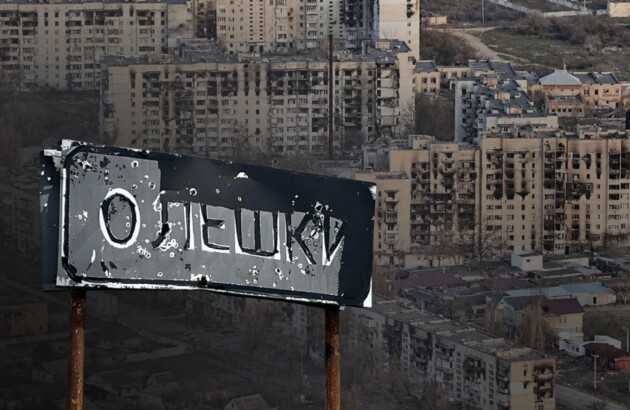
Mariupol became a symbol of resilience, pain, and the struggle for survival during russia’s full-scale invasion. In the spring of 2022, the city endured a complete siege for more than 80 days – without water, electricity, communication, medical care, or any safe way to evacuate. The russian army was deliberately destroying residential neighborhoods, hospitals, schools, shelters, and other places where civilians were staying.
Today, we remind the world of the crimes committed by russia against Mariupol and its residents. The exact number of victims is yet unknown, as the occupation authorities continue to conceal the consequences of the blockade and the mass killings of civilians. East SOS publishes testimonies of people who survived the siege of Mariupol, documented by our team.
These are the stories of losing homes, loved ones, and hope, and fighting to stay alive. Their voices must be preserved so that the tragedy of Mariupol does not become mere statistics and so that truth and accountability are upheld.
In 2022, 17-year-old Maria Vdovychenko was studying at one of Mariupol’s schools and making plans for the future. However, russia’s invasion destroyed her family’s peaceful and happy life. Trying to survive, the family hid in a basement shelter. Because of the stress and horrific circumstances, Maria’s mother’s heart stopped beating.
“One night she stopped breathing; her heart stopped beating. That night I was sleeping next to my mother and felt some commotion, someone pushing me. I woke up and saw my father performing CPR on her. At that moment, he was praying, prying loudly – it was his hope and a way to keep the rhythm. I saw that my mother was not breathing or moving; she was very pale, almost gray. I took her hand and held her cold hand. Eventually, my father managed to resuscitate her. Still, it was an extremely difficult moment – there was no water, and not a single neighbor offered help or even spoke to us.”
Maria’s younger 12-year-old sister, Nelia, stopped speaking after witnessing her mother’s suffering.
“Since then, Nelia stopped speaking. She was 12 years old at the time. And she did not speak to us until we managed to leave for Ukraine and almost two months had passed after the evacuation.”
- “Filtration”, Violence, and Killings of Civilians by the russian Army
Around mid-March, the family decided to evacuate. But even after leaving the shelled city, their suffering did not end. The family was forced to go through so-called “filtration”. russian soldiers interrogated Maria alone.
“They checked my body for tattoos. I was forced to undress completely – there was no screen and no woman conducting the inspection. I had to expose my whole body to prove there was nothing there. Meanwhile, they made remarks about Ukrainians, saying how bad we are and what should be done to us. They mocked me, saying I was dirty and that my legs were crooked – it was all extremely humiliating. It lasted quite a while, and I tried not to react, though I felt like crying the entire time. When it was finally over, they stamped a piece of paper with the date to confirm I had passed filtration and handed it to me. I barely had time to get dressed because they immediately started pushing me outside.”
Anastasiia Meshkova lived in Mariupol’s Livoberezhnyi District and witnessed “sweep operations” in the city that involved searches and killings of civilians. She also endured the torture of “filtration” herself.
“During one of the first sweep operations, russian soldiers were shooting people. God, every now and then you could hear someone enter the next room, then screaming, ‘Please don’t, don’t!’ – followed by gunshots…”
While leaving the city, Anastasiia was interrogated by russian soldiers who tried to find out whether she knew anything about Ukrainian servicemembers. They resorted to both psychological and physical violence.
“During filtration, I stood there silently, and they realized I wasn’t going to say anything, so they started asking even more questions – where my acquaintance lived, where we met. They kept escalating emotionally, and eventually they beat me with the butt of a gun because I stayed silent. The scariest thing was that my mother, who has asthma, was standing on the other side of that shack, and I understood that I couldn’t tell her anything because she would panic and have an attack. She asked me what happened, what was going on there, and I told her, ‘Nothing, everything’s fine.’”
- Shelling of Residential Buildings and Civilian Infrastructure
Anastasiia witnessed civilians dying under the rubble of buildings destroyed by russia.
“In front of our building there were five-story apartment blocks where people were trapped in collapsed basements. We could hear them screaming, but we couldn’t do anything. Nobody helped. Whenever something happened, people just died, and that was it. The bodies of the dead smelled of decay – people who had not been buried, people who had simply died. You could see an arm here, a leg there, and there was so much of it. There are no words to capture how much of it there was. The entire road, everything, was covered in blood. You looked out the window, and everything was black and red. Later, the sea was treated with chlorine to hide the stench of dead bodies.”
Oleksandr Liakhov remained in Mariupol until the end of March 2022 and repeatedly witnessed russian shelling of the city.
“I was boarding up the balcony when a russian tank fired. A fire started, and there was already no water. I suffered a severe blast injury, the guys fell down screaming. I thought maybe someone had been killed. I grabbed people and pulled two of them out. Then we extinguished the fire together. The tank was firing directly at the eighth floor. That was my first blast injury. And we were constantly under shelling. Sometimes I needed to cross Kuprina Street but couldn’t because snipers were there.”
- Failed Evacuations and the Humanitarian Catastrophe in Shelters
During the fighting for the city, Yuliia Shabanova and her husband stayed for almost two months in an underground shelter in a converter shop. They managed to evacuate only on the third attempt – russians twice disrupted the agreed civilian evacuation by shelling the area. Many people with children were hiding in the shelter, and there was not enough food for everyone.
“They cooked soup and added pasta to it. It was all very low-calorie food. We were hungry all the time. All conversations were only about food. I saw children playing a game where they imagined a store. One little girl asked me to draw some food. The children drew pizza, sweets, and things like that. They imagined going to a shop and buying food. All conversations were about food.”
Kateryna Sukhomlynova, a member of the Mariupol City Council, volunteer, and rescue worker with the Maltese Relief Service, helped local residents, evacuated civilians, and saved lives after the start of the full-scale war. During her volunteer work, she witnessed the terrible conditions in which Mariupol residents struggled to survive.
“People were trying to survive in stairwell-based communities, grouping together with neighbors, with people sheltering in the same basements. They pooled whatever food and supplies they had left and cooked together for everyone. At least three times a day they could have a small cup of hot soup because the situation was getting worse and worse with every passing week.”
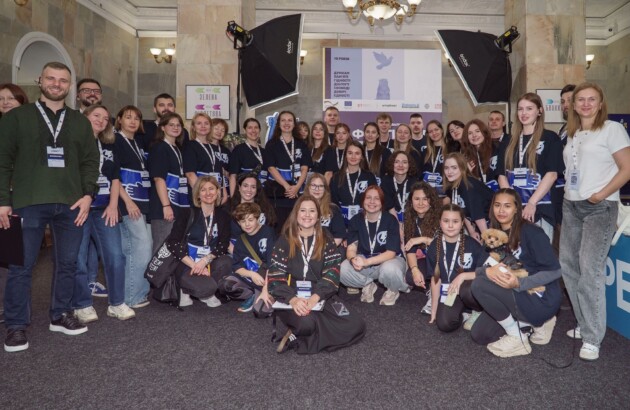
War crimes documentation by the East SOS team is carried out within the project “Support for War-Affected Vulnerable Groups and Residents of Remote Areas of Ukraine”, with financial support from the European Union.