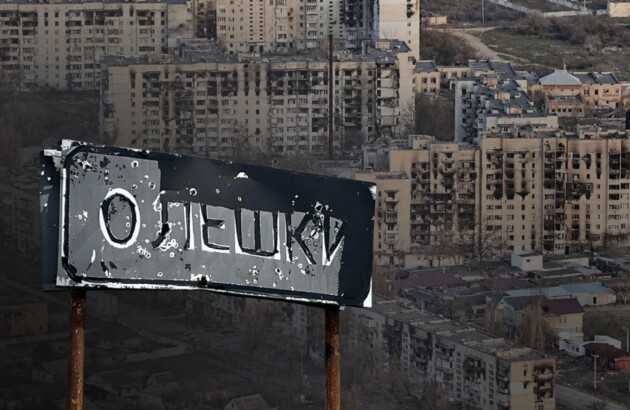
“When russian soldiers occupied Oleshky, they took all the boats from us”: Eyewitness Testimonies of russia’s Terrorist Attack on the Kakhovka HPP
On June 6, 2023, russia blew up the Kakhovka Hydroelectric Power Plant (HPP), causing a large-scale humanitarian and environmental disaster. As a result of the flooding, thousands of people were forced to leave their homes and lost their property and their livelihoods.
Back on June 30, 2023, the EAST SOS Charitable Foundation published a report detailing the consequences of the destruction of the Kakhovka HPP by russian occupation forces. From the first days the EAST SOS team worked at the site of the tragedy: evacuating people from flooded areas and delivering humanitarian aid, water, and hot meals.
The terrorist attack directly affected Kherson, Mykolaiv, Dnipropetrovsk, and Zaporizhzhia oblasts.
This report presents the findings of our monitoring mission, firsthand testimonies from affected residents, and a comprehensive analysis of the disaster’s impact on local communities, the environment, and the economy. The document also provides evidence of the inaction of the occupation authorities on the left bank of Kherson Oblast.
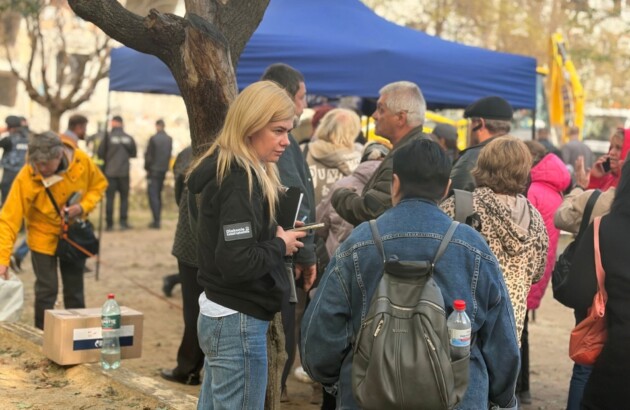
In this selection, we publish testimonies from people who survived the consequences of the destruction of the HPP. The witnesses’ names have been changed for security reasons.
Following the terrorist attack, flooding in Oleshky left people with no way to escape
At the time of the destruction of the Kakhovka HPP, Kateryna’s parents were in the city of Oleshky. Within just a few hours, rising waters cut off any route to safety:
“I called my parents, who were in Oleshky at the time, and told them that the HPP had been blown up. But after 1 p.m., the town started flooding, and the water was rising very quickly. My parents could no longer escape. My bedridden grandmother and seriously ill grandfather were still at home. My mother went to rescue them, pulled my grandmother out of the house, and from around 4 p.m. until 11 p.m., they stayed in the water holding onto a shed.”
russian soldiers blocked the evacuation
According to witnesses, russian soldiers not only failed to support the evacuation of civilians but also actively obstructed efforts to save people. In particular, they seized boats that local residents could have used to evacuate from the flooded areas, Oksana explained:
“When russian soldiers occupied Oleshky, they took all the boats from us. We all live near the river, and almost every family had a small boat that men used for fishing or families used for leisure. So, that left us with nothing to escape or save others with, and the russian soldiers did absolutely nothing. Only a few people had inflatable boats, but they couldn’t save everyone.”
After the water level rose rapidly, many people in Oleshky were unable to get to safety on dry land. To survive the night, they had to stay in the middle of the flooded streets in boats tied to trees, Halyna shared:
“Our friends stayed in their yard, trapped by the water. They tied their boat to a tree and spent the night in that boat along with their neighbors, who had also stayed in their home until the very last moment. But then, when the house started going under, they climbed into the boat and just sat there like that all night.”
People were forced to survive in flooded yards
Despite the risks, local residents continued searching for and evacuating people from flooded houses. According to Halyna, moving around in rubber boats to rescue others was extremely dangerous.
“My husband and son tried to reach people using rubber boats. But those kinds of boats are just too unpredictable in conditions like that. So, they had to move by grabbing onto the power lines on the poles. Those poles were totally submerged at that point, so they were pulling themselves along by the wires.”
People’s survival often came down to neighbors helping neighbors. But after the first survivors were evacuated, russian soldiers stopped boat owners in Oleshky from going back for the others who were still trapped. Kateryna told us about this:
“Thank God, neighbors took action. Those who had boats started rowing through the streets, looking for their neighbors, searching for those who were still alive. My mother and grandmother were lucky – they were rescued. A neighbor saved them and brought them to dry land. But the russians wouldn’t let him make another trip in that boat. They started shooting over his head and turned him back. That man couldn’t evacuate anyone else until morning. Everyone else just sat on the roofs of their houses, waiting for dawn. That’s how my dad and his own mother spent the night, sitting on the roof until morning.”
Residents of the flooded areas reported receiving no assistance from the occupation authorities. According to Mariia, saving lives was left entirely up to local residents and volunteers:
“The russian soldiers lied, saying they were rescuing people, pumping out the water, and bringing drinking water. They did none of that. They did nothing for a month, even after the water receded. It was very hard without drinking water and electricity. There was still gas in Oleshky. That was how people managed to hold on somehow. Then, in May or April 2025, a large gas pipeline there was destroyed, and it could not be repaired, so people were left without gas.”
The destruction of the HPP by the occupation forces caused a prolonged humanitarian crisis
For many people, the struggle for survival did not end after they were rescued from the flooded areas. One of the biggest problems in the flooded settlements, including Oleshky, was the lack of sufficient drinking water. Maryna shared:
“By then, we knew where we could get some water – from those who had those kinds of water pumps at home. But we were terrified to drink that water because just imagine how much filth and all kinds of stuff was in it: gasoline, diesel, outdoor toilets – everything was flooded, everything was underwater.”
The documentation of war crimes by the EAST SOS team is carried out within the project “Support for War-Affected Vulnerable Groups and Residents of Remote Areas of Ukraine” with financial support from the European Union.