Imitation of Democracy: Pseudo-Referendums in the Temporarily Occupied Territories of Ukraine – Eyewitness Testimonies Collected by the EAST SOS Documentation Team
The pseudo-referendums conducted in the temporarily occupied territories of Ukraine in 2014 and 2022 were used as a tool to create the appearance of public support for establishing russian control. By using external attributes of the electoral process, such as polling stations, ballots, and ballot boxes, it was intended to present these events as an expression of people’s will. However, the presence of armed people, threats, and coercion contradicted the very possibility of freely expressing people’s civic position.
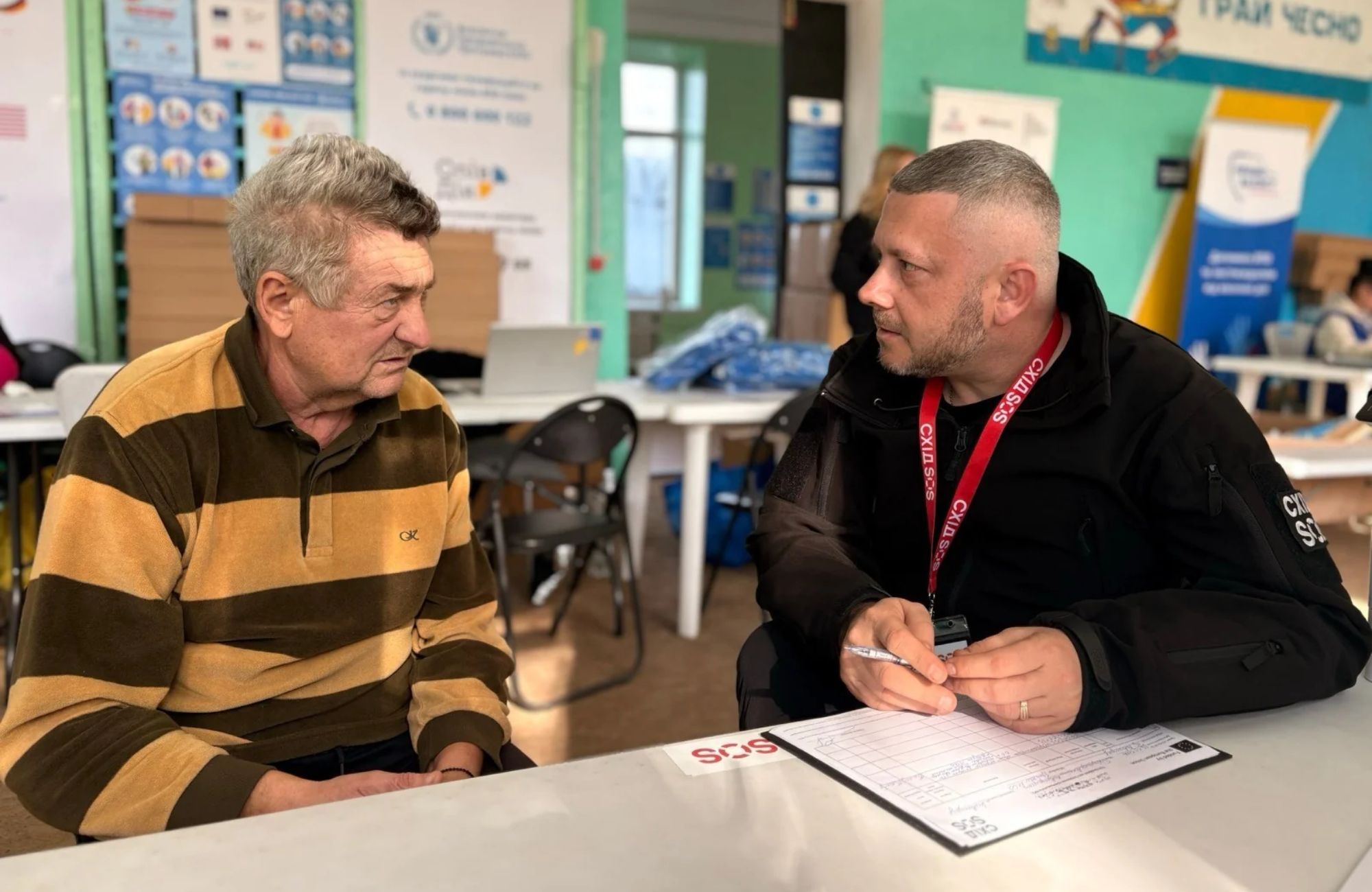
On the International Day of Democracy, the EAST SOS Charity Foundation publishes eyewitness testimonies documenting the pseudo-referendums held in Ukraine’s temporarily occupied territories in 2014 and 2022. Their stories demonstrate how russia undermines democratic rights and freedoms while using the appearance of voting procedures to create an illusion of support for occupation. The names of respondents have been changed for security reasons.
On 11 May 2014, pro-russian armed groups organized a pseudo-referendum in part of Luhansk Oblast on the so-called “state independence” of the “Luhansk People’s Republic”. The illegal vote was used to create a false impression of public support for separating the region from Ukraine.
Pseudo-authorities attempted to legitimize occupation through pseudo-referendums
“A referendum is something that concerns the whole country. If it had been an official referendum, it would have been covered on television, there would have been billboards and a lot of information. But here everything somehow happened secretly and unofficially. I did not know for sure whether people could face prosecution for it, but why take part in such a risk?” said Maryna from Luhansk.
In the temporarily occupied Luhansk Oblast, armed representatives of security structures threatened employees of local administrations with weapons and forced them to prepare polling stations for the pseudo-referendum:
“We had a “referendum”, although the mayor was against it – he had a pro-Ukrainian position. But they entered the city council with weapons and took the ballot boxes on their own. The city council employees could not do anything because weapons were pointed at them. There were polling stations, there were observers, ballots were sent to addresses. Everything was like in ordinary elections, only these were pseudo-elections,” – Valeriia, Luhansk Oblast.
For example, employees of the library, where a polling station had been located even before the occupation, deliberately closed the facility to prevent the pseudo-referendum from being held there. However, after armed people arrived and threatened that they could lose the library, they were forced to open the premises. According to the employee’s testimony, library staff did not participate in organizing or conducting the voting.
“There had always been a polling station in our library. And in May, I think even on 8 May, we deliberately closed the library so that nobody would come to hold a “referendum” there. The library was closed, and I had actually gone to my summer house. However, management called to inform us that armed people had arrived and that we would have to open the library. We opened it because there was no choice. They told us: “Either you open it and we conduct the referendum, or…”. As if to say: “Things may develop in different ways, you may even be left without a library”. We provided our premises. I was given a letter from the “South-East Army Headquarters’. In this appeal, they politely asked us to assist in providing premises. Everything was very nicely written. And at the bottom, in small print, it said: ‘In case of disobedience, measures will be taken according to the laws of wartime…” shared Mariia from Luhansk Oblast.
Coercion and intimidation of local residents by pseudo-authorities under the auspices of russia
To encourage residents to participate in the pseudo-referendum in Kherson Oblast, organizers held propaganda events in public places, combining speeches with promises of receiving groceries for voting. According to eyewitness testimonies, such actions took place in the presence of armed military personnel, and passers-by were pressured to participate in the vote:
“Yes, the “referendum” was held, although, again, what kind of referendum was it? For example, at the market they stood near the shops, this is what I saw with my own eyes. Near the shop, I think it was “Eva”, there was a woman with a bow on her head, wearing some kind of costume, and she was singing. And around them, in a square, there were armed soldiers standing on all sides. They were running a promotion: “Give your vote and receive…” I think it was some kind of poppy-seed bagel or something else. It was something aimed at pensioners. And it turned out that if you were walking around doing your own business and they approached you, then, essentially, you had to go and vote,” shared Olena from Kherson.
Some residents tried to avoid participating in the pseudo-referendums: they left or stayed at home, refusing to open their doors during house visits. According to the testimonies provided, people pretended that they were not home in order to avoid contact with voting organizers and possible coercion to participate.
“We stayed at home, and if we went somewhere with our neighbours to get food, it was only when we knew for sure that nobody was nearby and there was no danger. But there were moments, particularly during this fake referendum, when they went around houses and apartments and conducted voting there. We hid at home and pretended that we were not there. Thank God, they passed by, and we did not participate. But even after that, we still went outside – to the shop or for other needs. Once I was stopped for a document check, and I had a Ukrainian passport. He asked: “Why is it still Ukrainian?” I was confused, did not know what to answer, and was overwhelmed by panic. I said that it was very dangerous now and that was why I did not leave home,” shared Oleksandra from Kherson Oblast.
Occupation forces used weapons to intimidate and control the population
During the pseudo-referendums, armed people went door-to-door and demanded that local residents participate in the voting. The presence of armed people created an atmosphere of intimidation, where refusing to participate could be perceived as a threat to personal safety.
“Yes, the “referendum” took place, and they came to our street and approached every house. But how could you not vote if their representative was walking around in civilian clothes, and there were two people with assault rifles nearby? Of course, you had to. For example, they asked me, well, I did not vote because I was not registered in that house. I told them that I did not live there,” shared Liliia from Kherson Oblast.
The publication was prepared within the framework of the project “Protection and Psychosocial Services for People with Limited Mobility and Persons with Disabilities Affected by the War” supported by the Swedish International Development Cooperation Agency (SIDA), based on testimonies collected by the EAST SOS Charity Foundation’s documentation team since the beginning of the full-scale invasion.