How russia Erases the Ukrainian Language in Temporarily Occupied Territories: Testimonies Marking the European Day of Languages
The European Day of Languages is celebrated on September 26, to promote the preservation of linguistic diversity and mutual understanding between peoples. Meanwhile, on September 8, 2026, russia celebrated the Day of the Languages of the Peoples of the russian federation for the first time. The holiday was instituted by a decree of the russian president in November 2025, and the russian authorities extended the practice of its observance to the temporarily occupied territories of Ukraine as well. As noted by the media of the aggressor state, “…with all the linguistic diversity of russia, a special place is occupied by the, the russian language”.
Although the newly established holiday is officially intended to promote linguistic diversity, in practice it has become another platform for promoting the russian language and establishing its dominance over the other languages spoken by peoples living in the russian federation.
In the temporarily occupied territories of Ukraine, russia is simultaneously systematically pushing Ukrainian language out of education, public spaces and everyday life. Children are drawn into the russian system of state holidays, cultural narratives and education, while Ukrainian textbooks are removed from school libraries and replaced with russian ones.
War crimes documentation specialists from the EAST SOS Charity Foundation have collected testimonies from civilians describing how the russian occupation authorities are pushing out the Ukrainian language and imposing russian on children and adults in the temporarily occupied territories. These stories show how the policy of russification is enforced in practice, from pressure on people for using Ukrainian to schools being transferred to russian educational programs.
russia imposes its language and identity in the temporarily occupied territories
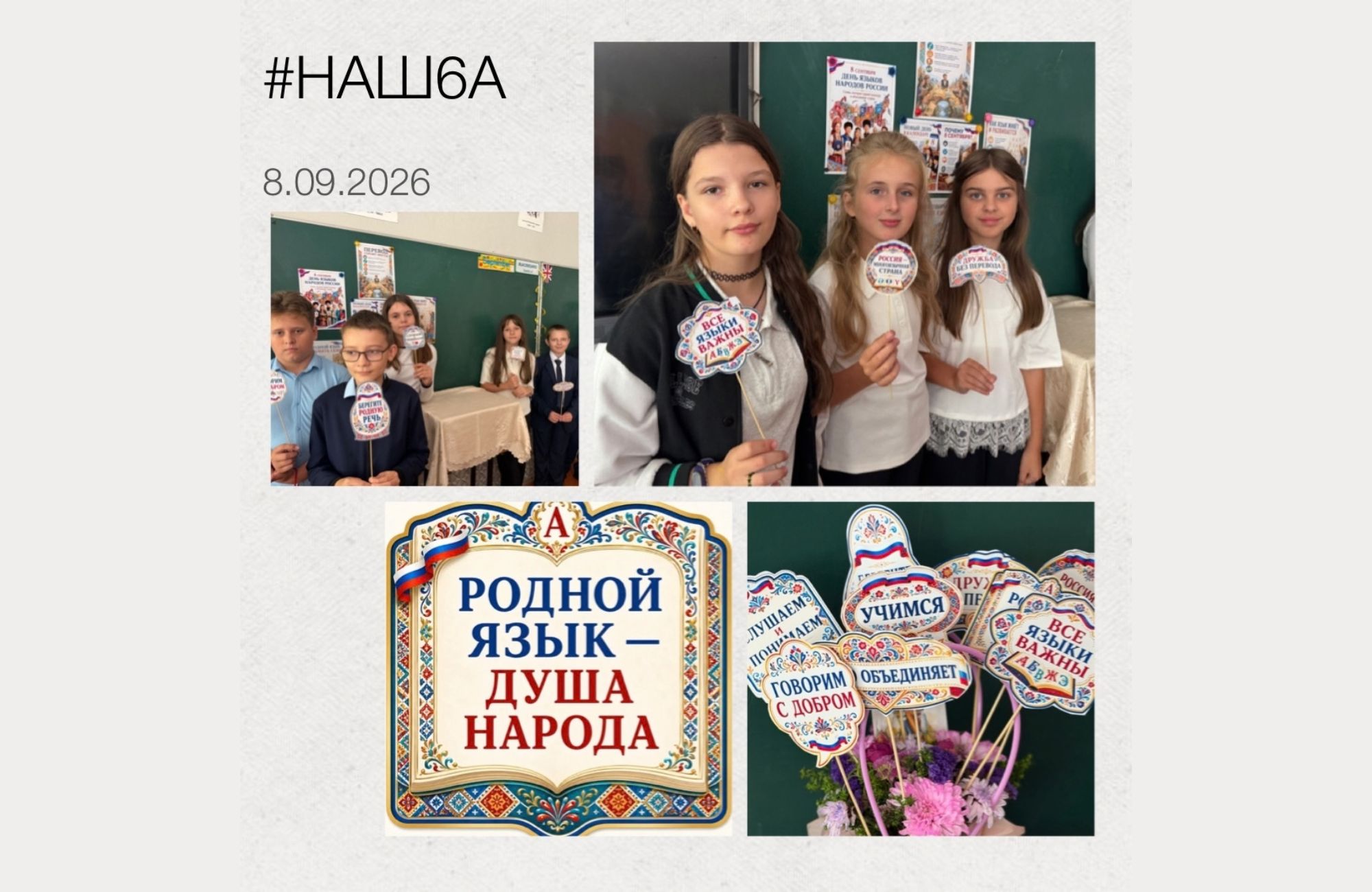
On the occasion of the Day of the Languages of the Peoples of the russian federation, schools in the temporarily occupied territories held events where young people were offered activities related to russian folklore and the cultures of the peoples of the russian federation. russia is erasing Ukrainian children’s identity by involving them in state holiday celebrations, imposing cultural narratives and presenting the idea of a “multinational russia” as their own country. Meanwhile, the so-called multinational character is represented by girls dressed in “kokoshniks.”
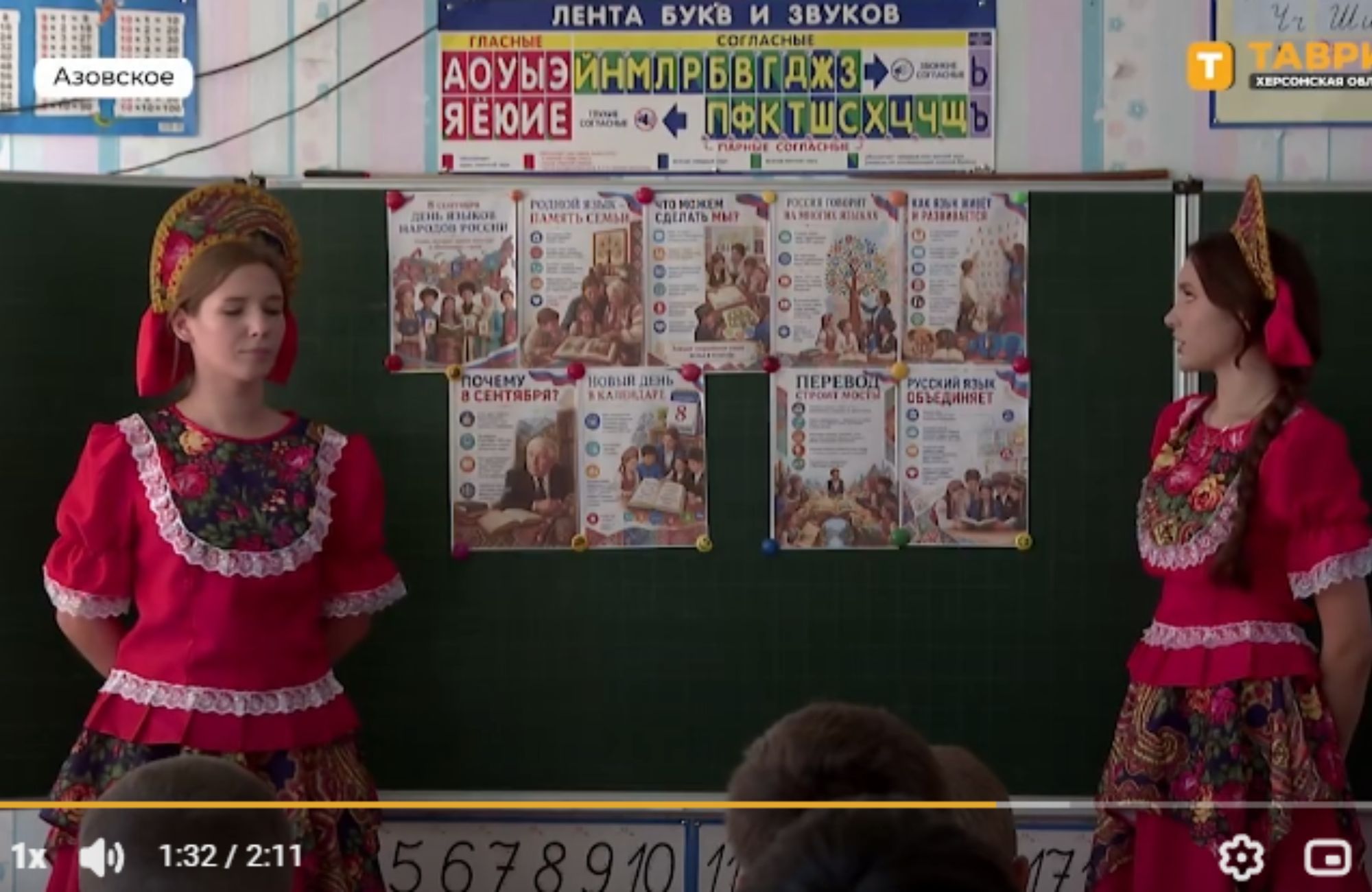
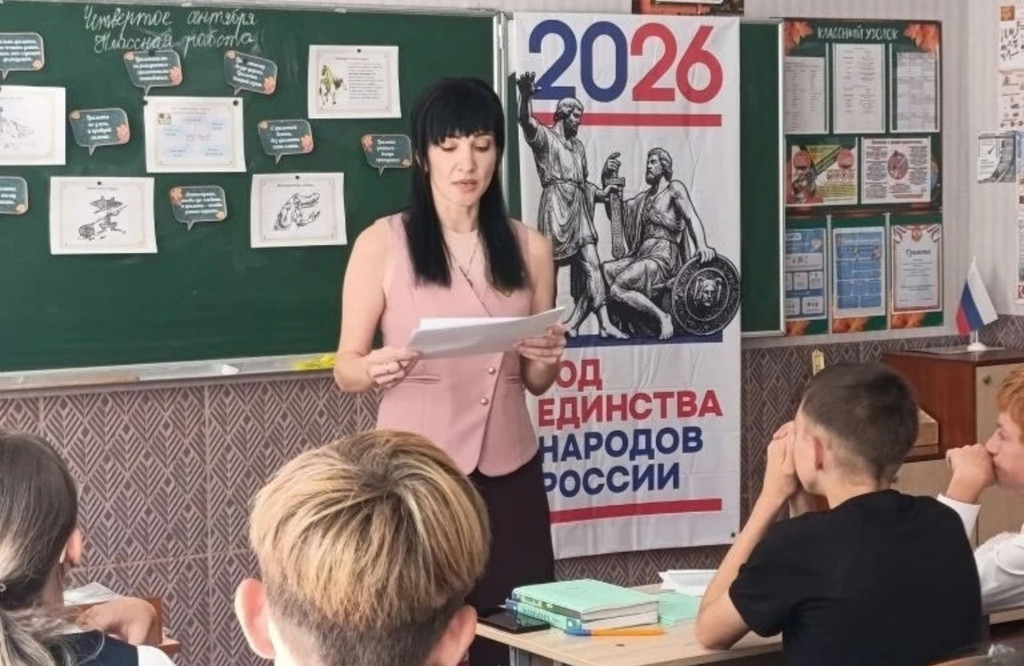
A school in the temporarily occupied city of Berdiansk, Zaporizhzhia Oblast, also held a lesson marking the so-called “Day of the Languages of the Peoples of the russian federation”. During the lesson, against the backdrop of a portrait of the russian president and a banner marking National Unity Day, the teacher spoke to students about the importance and value of every language while the russian national anthem played. The classroom decorations clearly demonstrated the dominance of russian state symbols and political narratives. In this context, the declared respect for linguistic diversity was combined with the imposition of russian identity on children and their integration into the symbolic space of the occupying state.
The occupying authorities continue to supply schools in the temporarily occupied territories with russian textbooks. In addition, since September 2026, children living under occupation have been forced to study using new textbooks. One example is The History of Our Region: Donbas and Novorossiya. The textbook was prepared by V. Medinsky, one of the leading historians in the russian federation and an ideologue of modern russian imperialism.
The testimonies collected provide evidence of the deliberate imposition of the russian language in Ukraine’s temporarily occupied territories (TOT). We emphasise that the russian federation has pursued a policy of suppressing Ukrainian identity in the temporarily occupied Donetsk and Luhansk Oblasts since 2014. Speaking Ukrainian in public could serve as grounds for unlawful detention:
“Basically, it could happen just like that, for no reason at all. If you, God forbid, let something slip in Ukrainian, that was it. You could be detained and tortured,” said Anastasiia, Donetsk Oblast, 2014.
Persecution for Speaking Ukrainian and the russification of Education in TOT
The suppression of the Ukrainian language also extended to education. Children who spoke Ukrainian were called in for “talks” with school administrators. Students were threatened, in particular, with the mobilisation of their parents:
“But if you are a child aged 12–15 and speak Ukrainian during a break, you can be called into the principal’s office. And the principal, in the presence of some man wearing a St George’s ribbon, may swear at you and even threaten that your parents will be taken somewhere – to join armed formations, let’s put it that way,” said Anastasiia, Donetsk Oblast, 2014.
Following the occupation of parts of Kharkiv Oblast in 2022, the russian administration began introducing russian language classes in schools and switching the education process to russian curricula:
“At the meeting, the occupation administration, speaking rudely in russian, demanded that we cooperate, follow russian curricula and comply with russian standards,” said Volodymyr, a teacher, Kharkiv Oblast, 2022
Destruction of Ukrainian Textbooks and the Suppression of the Ukrainian Language
Ukrainian textbooks were systematically removed from school libraries. Most of the books disappeared from the shelves and were most likely cynically destroyed by the occupying forces:
“They arrived with a list of textbooks they intended to confiscate. These included textbooks on Defense of Ukraine, the subject I teach, as well as Ukrainian language, Ukrainian literature and the History of Ukraine. In other words, everything related to Ukraine. And, of course, books by all our Ukrainian authors – everything that was there,” said Mykhailo, a teacher, Kharkiv Oblast, 2022.
The occupation administration formally allows Ukrainian to be studied as an elective subject. However, parents are deliberately intimidated to discourage them from submitting the relevant applications. As a result, Ukrainian is effectively being pushed out of the education process and everyday communication:
“Under occupation, all subjects are taught in russian, which is the state language. Accordingly, russian is also the language of communication. The curriculum includes English, while Ukrainian is listed as the native language and can be studied through electives or extracurricular activities. So, there is an opportunity to study it, but only if parents submit an application. At the same time, parents are afraid to submit applications stating that they want their children to study Ukrainian. If Ukrainian was still part of the curriculum during the first year, today people are already very afraid, remain silent and avoid expressing their position on Ukraine,” said Maryna, Zaporizhzhia Oblast, 2022.
Since the beginning of the full-scale invasion, the EAST SOS Charity Foundation team has conducted more than 1,235 interviews and documented 2,176 alleged war crimes.
This publication was prepared as part of the project “Protection and Psychosocial Services for People with Limited Mobility and Persons with Disabilities Affected by the War”, funded by the Swedish International Development Cooperation Agency (Sida), and is based on testimonies collected by the war crimes documentation team of the EAST SOS Charity Foundation since the beginning of the full-scale invasion.