Education Under Attack: How russia is Turning Ukrainian Schools in the TOT into Barracks and Centers of Propaganda
Every new school year for children in Ukraine is a trial by war. Some sit at their desks to the sound of air raid sirens, while others connect with their teachers through a screen from a bomb shelter.
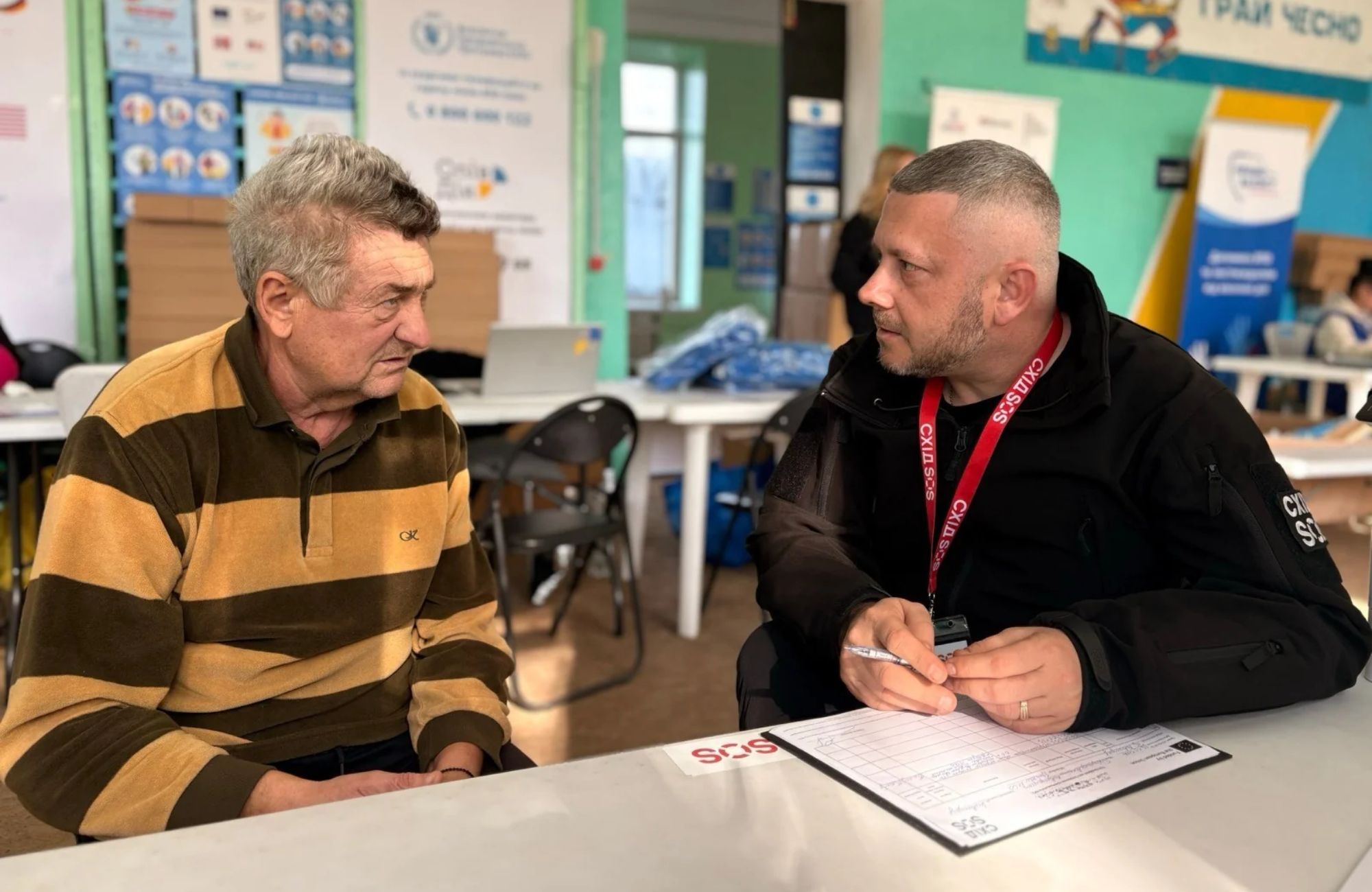
For Ukrainian children in the temporarily occupied territories (TOT), the beginning of the school year also means returning to an education system that russia uses to impose its identity, spread propaganda, and push militarization. The EAST SOS Charity Foundation documents these practices based on testimonies of people who experienced occupation and managed to leave.
Testimonies collected by our war crimes documentation team show that children are forced into military-patriotic events, meetings with russian military personnel, learning russian state symbols and narratives, participating in militarized youth organizations, and even taking part in military training classes.
1. The Autonomous Republic of Crimea
Over 12 years of temporary occupation, the education system of the Ukrainian peninsula has become one of the most deeply integrated into the russian federation. The russian education system in Crimea is aimed at the complete destruction of Ukrainian identity. Additional classes conducted by russian military personnel have become commonplace, including, for example, regular tactical medicine training. A wide range of military-patriotic activities is being introduced, including the “I Serve the Motherland” campaign. As part of this initiative, so-called “SVO veterans” Yehor Timofeiev, Aleksiei Sachko, and Serhii Taitakov participated in school activities to promote service in the russian army. Sports-specialized schools are clearly viewed by russia as one of the platforms for influencing students. Such educational institutions host “military-sports” training sessions called “Rubezh. The Warrior’s Path”, implemented with the support of Roman Kulakov, a participant in the war against Ukraine. The classes are conducted exclusively by russian military personnel who took part in the so-called “SVO” [TN: SVO or special military operation is the official term used in russia to describe the russian invasion of Ukraine].
Heorhii was in the 4th grade when russian forces occupied Crimea. From 2014 to 2023, the boy was forced to study within the russian education system. Recently, he managed to leave the temporarily occupied peninsula. Heorhii told the EAST SOS war crimes documentation team about the impact of military-patriotic education on Ukrainian children living under temporary occupation:
“Young people joined Yunarmiya [TN: Yunarmiya or Young Army, a russian paramilitary youth organization], because it was simply interesting, and then they developed the impression that “being in the army can be cool, and you can join it”. At school, we also had one teacher who said that we, boys, lived in a military city, that we were defenders of our state, and that we should go to military educational institutions. She annoyed many people and multiple complaints were filed against her, but she was kept at her position. She taught the russian language and literature.”
2. Donetsk Oblast
Since 2014, russia has been gradually introducing its own education system in the temporarily occupied territory of Donetsk Oblast. Today, the russian federation uses children’s creativity as a tool for shaping memory policy and constructing loyalty to russian occupation administrations.
In particular, members of the russian “Movement of the First” [TN: a russian state-run youth movement, created to replace the Soviet Pioneer organization] in the so-called “dpr” [TN: donetsk people’s republic is an illegally annexed part of Donetsk Oblast of Ukraine] were involved in preparing the collection “The First About the First”. The publication includes poems, drawings, and letters by children from the temporarily occupied territory of Donetsk Oblast dedicated to Oleksandr Zakharchenko. The occupiers present the book as a collection of personal memories and statements by children that allegedly did not undergo editorial interference.
Through writing letters and poems and creating drawings, children are not only introduced to the russian historical narrative but are also encouraged to personally and emotionally identify with it. Such practices contribute to strengthening a positive image of representatives of occupation structures, legitimizing their role, and gradually shaping in children a political identity based on russian state and ideological narratives.
It is clear that the practice of involving russian military personnel in conducting so-called “lessons of courage” in educational institutions of Donetsk Oblast continues. In one of the lyceums in Donetsk, servicemen of the 76th Guards Air Assault Chernigov Red Banner Order of Suvorov Division of the armed forces of the russian federation conducted a class as part of the russian airborne troops’ agitation and propaganda campaign “Heroes of Our Time”.
The class was accompanied by an exhibition of russian military equipment used in the war against Ukraine. Materials published by the occupation administration show servicemen putting body armor and helmets on primary school children, demonstrating unmanned aerial vehicles, and introducing children to military equipment.
They organized for schoolchildren an exhibition of modern weapons, military equipment, and gear used by russian military personnel in the war against Ukraine. The published materials show servicemen putting body armor and helmets on young children, demonstrating unmanned aerial vehicles, and introducing them to military equipment. In addition, russian military personnel performed patriotic compositions, while schoolchildren prepared creative performances.
Similar events are also planned to be held in schools in the temporarily occupied parts of Zaporizhzhia and Kherson oblasts.
To mark the so-called “Republic Day”, activists of the russian “Movement of the First” in temporarily occupied Makiivka held a youth forum within the project “Keepers of History”. russian military personnel were again involved in meetings with children. Afterwards, children participated in interactive activities dedicated to landmarks of Donetsk and Luhansk oblasts and studying regional history, and also left greetings dedicated to the so-called “republic”. Such commemorative dates of the self-proclaimed so-called “dpr” are created for the political socialization of Ukrainian children. The combination of glorification of military service, promoting russia’s interpretation of the history of Donetsk and Luhansk oblasts, and formation of a positive image of the occupation administration is aimed at changing the civic and political identity of children from the temporarily occupied territories of Ukraine.
Olena, whose daughter studied at a school under occupation, spoke about changes in the education system of the self-proclaimed “dpr” in 2026. Recently, they managed to leave the temporarily occupied territory. Since spring 2026, participation in the “Movement of the First” has become mandatory from the 5th grade, where boys are expected to study the basics of UAV operation, while girls study medicine. The teaching staff forces students to register for this extracurricular activity, and refusal results in moral pressure on children and their parents.
3. Luhansk Oblast
An identical situation with education is observed in Luhansk Oblast as well. For example, on the so-called “Combat Veterans Day,” activists of the “Movement of the First” from the temporarily occupied city of Antratsyt in Luhansk Oblast were ceremonially presented with russian passports as part of the federal program “We are citizens of russia!”
The documents were handed to children by a participant of the so-called “special military operation”, deputy of the occupation council of the Antratsyt municipal district Oleksandr Linkov, and deputy Vladyslav Senetskyi.
The official presentation of russian passports to children also took place in the city of Luhansk on Youth Day and russia day. According to russian media, in 2024, 888 people in Luhansk Oblast received russian passports, and almost one thousand more in 2025. Occupation authorities report that membership in the “Movement of the First” within the self-proclaimed “lpr” [TN: luhansk people’s republic is an illegally annexed part of the Luhansk Oblast of Ukraine] exceeds 100,000 young people. Furthermore, school children are systematically sent to so-called “recreation” camps in russia, including locations in Bashkortostan and Stavropol Krai.
Anastasiia lived under temporary occupation in Luhansk Oblast. She spoke about the impact of systemic militarized events targeting children:
“They introduced flash mobs where we danced to russian songs. One group of children wore red T-shirts, the second group wore blue ones, and the third wore light blue. During music lessons, we learned the anthems of russia and the “lpr”. They impose this through daily practices so much that I still remember the words of these texts. These celebrations had a strong impact on teenagers; in my class, there were very few children who had a positive attitude towards Ukrainians.”
4. Zaporizhzhia Oblast
In the territories temporarily occupied by russia after the start of the full-scale invasion, the integration of the educational system into the russian educational space is taking place much more intensively, in particular using the experience and practices that were previously tested in the temporarily occupied territories of Donetsk and Luhansk oblasts.
During the celebration of russia day in June 2026, on the basis of the multimedia historical park “russia – my history”, the occupation authorities organized a solemn ceremony of handing passports of a citizen of the russian federation to 16 minor residents of the temporarily occupied part of Zaporizhzhia Oblast within the framework of the federal program “We are citizens of russia!”. The event was attended by: Deputy Minister for Youth Policy of the occupation administration of Zaporizhzhia Oblast Anna Volodina, Deputy Head of the Main Directorate of the Ministry of Internal Affairs of the russian federation for Zaporizhzhia Oblast on Citizenship and Registration of Foreign Citizens, Police Colonel Maksym Artser, as well as Deputy Chair of the regional branch of the russian “Movement of the First” in Zaporizhzhia Oblast for Strategic Development Yuliia Siomik.
On June 22, 2026, the occupation authorities of Zaporizhzhia Oblast involved the “Movement of the First”, “Yunarmiya”, and students of the “Voin” center in a thematic event with the participation of employees of the Main Directorate of the Ministry of Internal Affairs of the russian federation for Zaporizhzhia Oblast, dedicated to the anniversary of the outbreak of the German-Soviet war. Participants were shown documentary films Trails of Alania and War’s Unwomanly Face about Soviet participants in the Second World War. In the children’s center “Krasnaya Gvozdika”, which is a branch of the Artek International Children’s Center, children from the temporarily occupied territories of Ukraine were involved in events organized by the russian “Movement of the First”. In addition to leisure and educational activities, the program provided for the manufacture of “dry shower” kits for russian military personnel, which, according to the organizers, were to be sent “to the front”. Also, the children were offered to take part in games and contests aimed at forming a positive image of russia, popularizing its history, achievements, and state identity.
Anna has been living under occupation in the city of Tokmak, Zaporizhzhia Oblast, since 2022. Therefore, for two years in high school, the girl was forced to study according to russian educational standards:
“There were already russian textbooks, their curriculum. It was generally very difficult to switch to the russian language. The first mandatory lesson was “Conversations about Important Things”, it was every Monday. Raising the russian flag was to the anthem, also every Monday. They offered to join the “Orliata” [TN: Eaglets, a state-run program for younger children], to improve grades.”
Unsurprisingly, russian soldiers were regularly brought into classrooms on russian state holidays. The goal is clear – to erase Ukrainian identity and prepare children for future military service in the russian army:
“Those who were being drafted into the army, obviously didn’t want to go. They wanted to escape the occupation, but they had no way out.”
5. Kherson Oblast
On the eve of russia day, in the Henichesk Center of Culture and Leisure, the occupation authorities held a solemn ceremony presenting russian passports to seven Ukrainian children who had reached 14 years of age, within the federal program “We are citizens of russia!”. The event was organized with the support of the Main Directorate of the Ministry of Internal Affairs of the russian federation for Kherson Oblast and was accompanied by the participation of representatives of the occupation authorities, who personally handed russian passports to the children. In addition to passports, the minors were presented with copies of the Constitution of the russian federation, passport covers, and branded souvenir products of the russian “Movement of the First.”
For russia day, its activists, together with the regional branch of the “United russia” party in the temporarily occupied part of Kherson Oblast, prepared a commemorative photo album for the birthday of Volodymyr Saldo, so-called “governor” of the occupation administration, which is celebrated on June 12. Ukrainian children and youth were involved in creating the album, sending drawings, poems, video greetings, and words of gratitude addressed to the head of the occupation administration. The publication “To the Mentor and Friend of the Youth of Kherson Oblast” contained materials that formed a positive image of Volodymyr Saldo as a mentor and a person who supports youth.
In June, in the temporarily occupied part of Kherson Oblast, with the participation of the russian “Movement of the First,” the regional stage of the All-russian military-patriotic game “Zarnitsa 2.0” took place, involving students from educational institutions from various settlements of the region. Participants completed tasks in basic military training. Among them, teams from a number of Ukrainian schools under temporary occupation are mentioned: Chaplynka No. 1, Syvaske No. 2, Prymorske, and Myrnske.
Ukrainian students affiliated with the “Movement of the First” and “Orliata of russia” from the settlements of Strohanivka, Henichesk, and Chaplynka were involved in participating in the International Festival of Childhood and Youth in Moscow. As part of the festival, the children visited Red Square, Victory Park, VDNH, and took part in workshops, games, and sports events. The final stage was a solemn graduation ceremony of “Orlyata of russia,” during which ten students from Chaplynka School No. 1 were officially admitted to the russian “Movement of the First.”
Dedicated to events on the occasion of the 10th anniversary of rosgvardia and the 215th anniversary of law enforcement troops, servicemen of rosgvardia together with the FSB of the russian Federation held a series of events for children and youth in the temporarily occupied territories, particularly in Zaporizhzhia Oblast. For kindergarten pupils, they organized a quiz dedicated to state symbols, cultural diversity, and natural riches of the russian federation, during which knowledge about russia as their motherland was imposed on the children. Youth took part in a meeting with rosgvardia servicemen in the format of “Dialogues with Heroes,” during which representatives of security forces spoke about military service. Within the framework of the event, messages were broadcast about the greatness of russia and the duty of every citizen to be proud of their state.
6. Higher Education Institutions in the Temporarily Occupied Territories
It is worth emphasizing that the number of propaganda events in higher education institutions is no less than in schools. According to the occupiers, over 13,000 applicant applications were registered at the Melitopol University in Zaporizhzhia Oblast. That is, the number of Ukrainian young people exposed to russian propaganda in higher education is significant. The content of propaganda events is similar to those held in schools: meetings with the military and military-patriotic events. In 2025, an event featuring russian soldier Maksym Khaiminov took place at the A.I. Kuindzhi Mariupol State University. In May 2026, the university administration encouraged students to join a number of russian military-patriotic events dedicated to the so-called victory day. In addition, the youth were involved in creating “patriotic video greetings.” Similarly, in April 2025, the occupation administration of the Melitopol-based university arranged student meetings with russian soldiers specifically aimed at recruiting youth for the war against Ukraine.
As Daryna reported, especially active military propaganda began in the universities of the so-called “dpr” from 2022:
“After 2022, just like everywhere in russia and in the occupied part of our country, propaganda posters appeared, and my group supervisor directed our boys, my classmates to join the russian army.”
Conclusions
Documented practices indicate that russia uses the education system in the temporarily occupied territories not to guarantee children’s right to education or support the operation of educational institutions, but as a tool for political indoctrination, militarization, and the integration of Ukrainian children into the russian state, civic, and military-political space. The conduct of russian citizenship acquisition ceremonies involving russian service members, the organization of military-patriotic events in educational institutions, the promotion of military service, and the display of weaponry demonstrate the systemic use of education to cultivate loyalty to the occupying power and its armed forces.
Such practice contradicts international humanitarian law, which does not grant the occupying power the right to alter the purpose of the education system or use it as an instrument of political or ideological assimilation of the population of the occupied territory. According to Article 43 of the 1907 Hague Convention, the occupying authority is obligated, as far as possible, to re-establish and ensure public order and safety while respecting, unless absolutely prevented, the laws in force in the country, rather than transforming its educational institutions in accordance with its own political goals. Similarly, Article 50 of the IV Geneva Convention imposes an obligation on the occupying power to facilitate the proper working of all institutions devoted to the care and education of children, rather than using them to impose its own state identity or military-patriotic ideology.
Particularly indicative is the systemic involvement of russian Armed Forces service members in the educational process. Combining instruction with displays of military equipment, practical training on the use of unmanned aerial vehicles, promotion of military service, and ceremonial events featuring russian military personnel effectively blurs the line between civilian education and the military sphere. Such actions are incompatible with the humanitarian purpose of education and contradict Article 51 of the IV Geneva Convention, which prohibits the occupying power from engaging in any pressure or propaganda aimed at securing voluntary enlistment of protected persons into its armed or auxiliary forces.
Furthermore, the documented measures contradict international standards for child rights protection. Article 29 of the UN Convention on the Rights of the Child stipulates that education shall be directed to the development of the child’s personality and respect for their cultural, linguistic, and national identity, rather than its replacement or the cultivation of loyalty to the occupying state. Instead, recorded practices demonstrate a deliberate policy of using the educational environment to alter the civic identity of Ukrainian children, legitimize the occupation authorities, and create a positive attitude toward russia’s armed aggression.
This publication was prepared as part of the project “Protection and Psychosocial Services for People with Limited Mobility and Persons with Disabilities Affected by the War,” funded by the Swedish International Development Cooperation Agency (SIDA), based on testimonies collected by the documentation team of the EAST SOS Charity Foundation since the start of the full-scale invasion.