A Full Evacuation Cycle: Dozens of Solutions That Help People Reintegrate After Leaving – the Story of Maryna
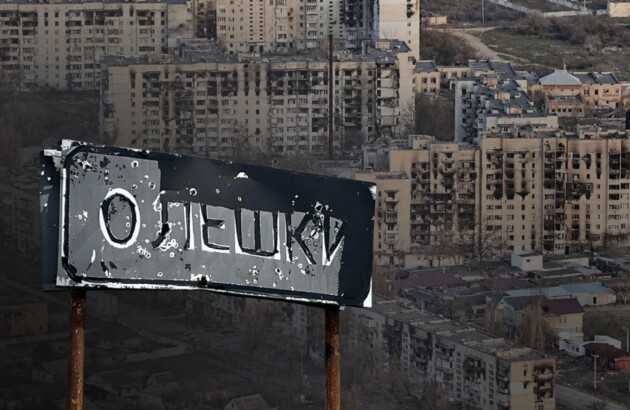
Maryna was born in Druzhkivka, Donetsk Oblast, into a large family. She attended a boarding school, helped care for her younger brothers, and started working at the age of 17 – first at a factory and later at a vegetable warehouse.
In the years before her evacuation, she lived with her partner, who had suffered two strokes. Maryna had also experienced a stroke. Since then, the left side of her body had been almost completely impaired, making it very difficult for her to move independently.
In January 2026, the East SOS team evacuated the couple from Druzhkivka. They were first taken to a transit center in Pavlohrad and later to the NGO Center for Social Adaptation of People with Disabilities Ocean of Kindness in Dnipro. There, Maryna was able to focus on recovering her health and began working with a rehabilitation specialist.
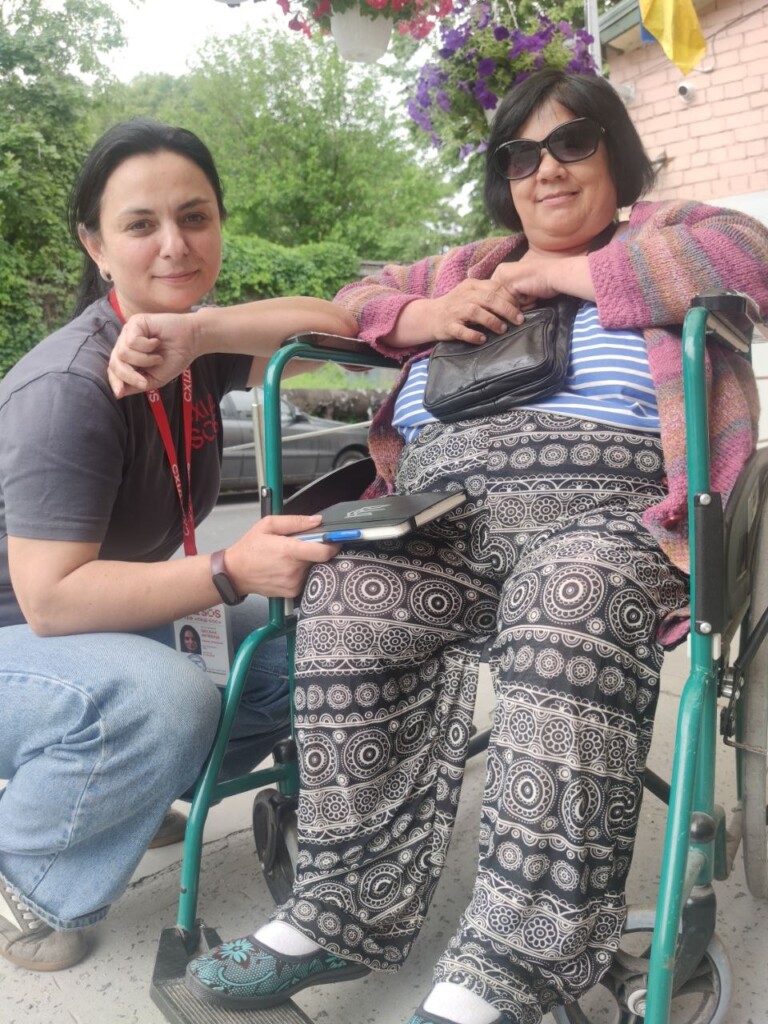
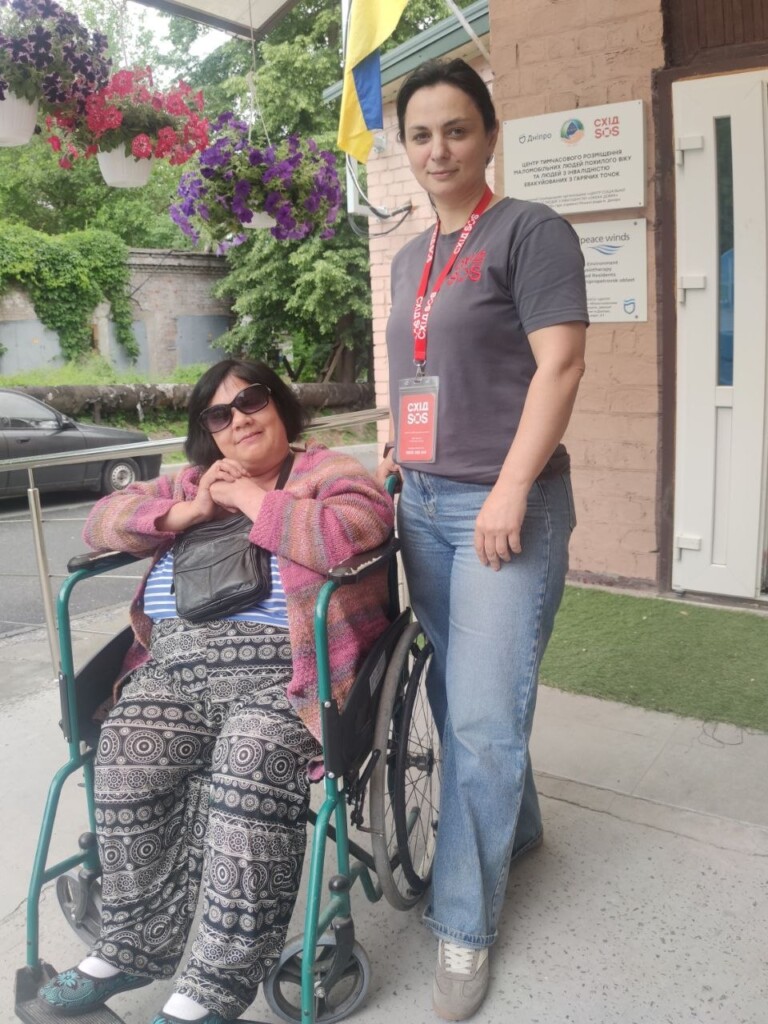
The East SOS Protection Officer Oksana Akchebash helped the woman restore her passport and tax identification number, open a bank account, obtain an IDP certificate and receive a one-time multipurpose cash assistance payment from UNHCR (UAH 12,300). Later, Maryna was granted Group IB disability status, allowing her to submit the necessary documents to the Pension Fund of Ukraine to receive benefits.
Today, Maryna continues her rehabilitation at the Ocean of Kindness Center. There are already positive results: she has regained mobility in her left arm and can move independently in a wheelchair. Meanwhile, the East SOS team is looking for a place where the couple can settle permanently.
“After evacuation, it is important for us not simply to find a person somewhere to live, but to prepare them as much as possible for the next stage of their life. If necessary, we restore documents, arrange state-guaranteed benefits, and look for opportunities for treatment or rehabilitation. For some people, this may be a state program for vision restoration; for others, dental prosthetics or rehabilitation sessions. Every case is different, which is why our support continues for as long as necessary – sometimes for a month, and sometimes for six months or longer,” says Oksana Akchebash.
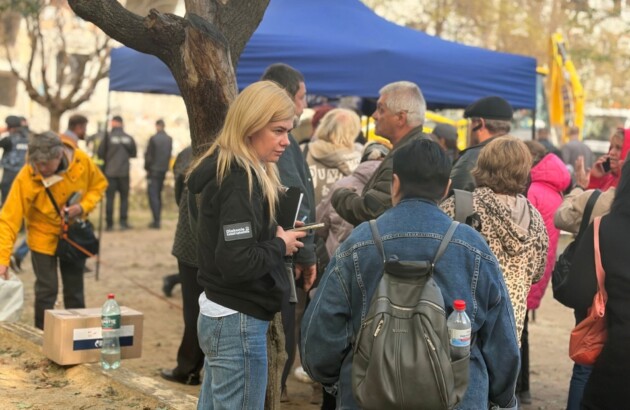
For East SOS, a full evacuation cycle means more than simply helping someone leave a frontline area safely. It involves dozens of solutions that help people adapt to new circumstances and rebuild their lives.
In May 2026, with the support of the Swedish International Development Cooperation Agency (SIDA), East SOS provided people affected by the war with 310 social and 223 psychological consultations and helped 43 people find a safe place to live. In addition, specialists in Dnipro and Zaporizhzhia held four psychosocial relief sessions for displaced women and women affected by the war.
Psychosocial support was provided as part of the project “Protection and Psychosocial Services for People with Limited Mobility and Persons with Disabilities Affected by the War”, implemented with the support of the Swedish International Development Cooperation Agency (SIDA).