The Humanitarian Crisis in Oleshky: Witness Testimony
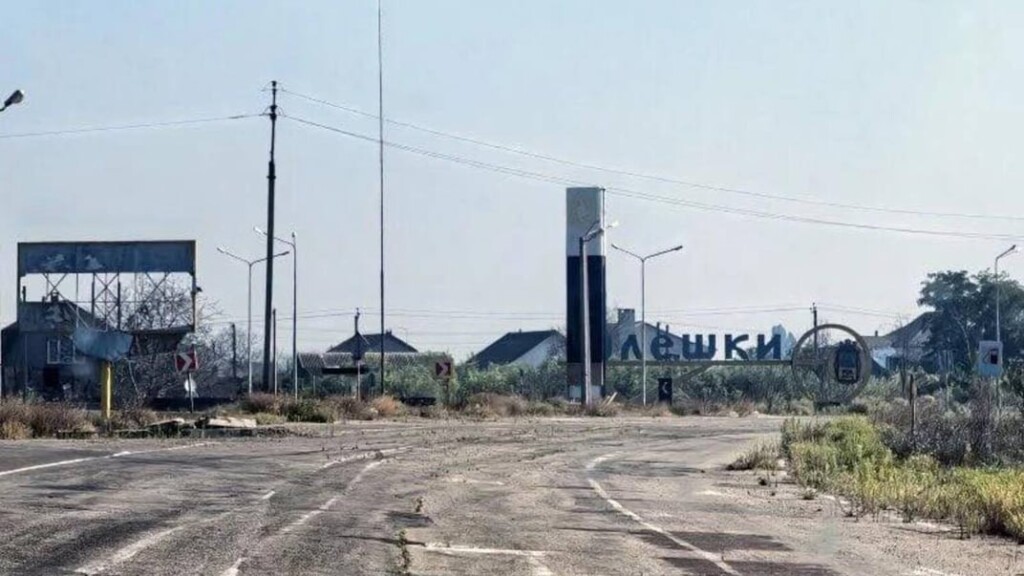
Since the start of the full-scale invasion, russia has deliberately created a humanitarian crisis in temporarily occupied territories (TOT). In Oleshky, in particular, control over the territory has been used to exert pressure on the civilian population. Restrictions on access to water, food, and medical supplies, the blocking of evacuation routes, and the obstruction of humanitarian aid create conditions incompatible with normal life and pose a direct threat to people’s health and safety. Such actions constitute a deliberate violation of international humanitarian law and demonstrate the use of humanitarian crisis as a weapon of war.
Dmytro Lubinets, the Ukrainian Parliament Commissioner for Human Rights, has reported on the critical situation in the city. He called on the International Committee of the Red Cross and the Human Rights Commissioner of the russian federation to facilitate humanitarian dialogue between Ukraine and russia, ensure safe evacuation routes for civilians, and guarantee unimpeded access to humanitarian aid for people left without food and water.
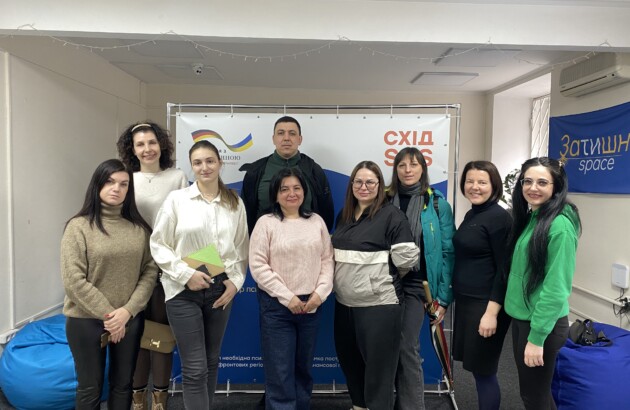
The East SOS team conducted 10 in-depth interviews with witnesses of alleged war crimes in Oleshky. The testimonies document cases of civilian injuries and killings, illegal detention, the use of starvation as a method of warfare, denial of medical care, and the destruction of civilian infrastructure. For security reasons, all names have been changed. All respondents have since left the TOT.
- Injuries and Killings of Civilians
Civilians attempting to access basic necessities, such as food, are becoming targets of russian drone attacks. Viktoriia shared the story of her mother’s death while trying to buy food:
“My mother was killed near a store while trying to buy food. A drone, actually several drones, struck the area. I was told there were three. Two people were killed, my mother and another man, and two others were seriously injured. This happened on March 5, around 8 a.m. (2026 – ed.). Everything was destroyed. Her body was taken to the morgue, but six days later it was still there. The ‘morgue’ is just an ordinary building with no refrigeration. There is no electricity in the city. There are also bodies of people who died from shrapnel and mine explosions. My father tried to arrange her burial, but he was told the investigation was ongoing and the body would not be released.”
In addition, russian forces have carried out indiscriminate drone strikes on civilian transport. Kateryna described how her mother was seriously injured in one such attack. Although she later recovered from her injuries and relocated to another town, she remains in a territory under occupation.
“Until November 2025, my mother had been living in Oleshky and, like most people of her age, did not plan to leave. On September 11, 2025, I received a message on Telegram from acquaintances, followed by calls, saying that my mother had likely been struck by a drone. Her friend had been killed, and my mother and the driver were seriously injured and in critical condition. She was taken to a hospital in Oleshky. Around the fourth or fifth day, her condition began to improve, and once she recovered from the shock, we were able to speak with her. Her left arm, leg, and side were all injured by shrapnel; some fragments remain in her arm to this day. No further surgery is planned. She remained in the hospital for a long time – about two months.”
Iryna also spoke about the use of drones against civilians in the city:
“There are people who refuse to leave because they are caring for animals. It’s their only source of comfort – they feel they cannot abandon them. But often, it comes at the cost of their lives. Last year, a drone dropped explosives on a woman who was caring for cats – she was killed.”
Volunteer Kseniia Arkhipova (name not changed), who left the occupied city in 2022, described the humanitarian situation in Oleshky. She is currently involved in evacuating people from the TOT. Through her Telegram channel, people regularly share messages about relatives and acquaintances who have died as a result of russian shelling or due to the worsening humanitarian conditions. Below is an incomplete list of cases documented by the volunteer:
“On June 24, 2024, Lidiia Veniiamynivna was killed by an enemy bomb that struck 20 Murskyi Lane. Larysa Malakhova was killed on February 27, 2025, when a shell hit a store. My mother, Larysa Filippova (born in 1962), died on March 5, 2026, near the Evelina store. Andrii Pastukhov was killed by a landmine on December 1, 2025. During the shelling of the Almaz bakery, Volodymyr Stepanskyi was killed. Mykola Romanenko, 77 years old, died in January 2026 due to illness, cold, and lack of medical care. Vdovych was killed by a landmine while attempting to leave Oleshky and later died in a hospital in Skadovsk on January 30, 2026. […] I have several hundred such reports. They are written by people whose relatives or friends have died. This is the situation in Oleshky.”
- Blocking Evacuation from the City
Residents of Oleshky continue to attempt to leave the city; however, the occupying administration systematically creates obstacles to evacuation. russian forces mine roads and target civilian vehicles attempting to exit the area, making safe evacuation extremely difficult. Iryna described the conditions faced by those trying to leave:
“The last time volunteers attempted an evacuation in winter, a driver agreed to take several people, including an elderly woman, a man, and a few others. While driving through the snow, the vehicle hit a landmine. Mines are scattered around the exits of the city for unknown reasons. The explosion was devastating – the driver lost his legs and died the next day in the hospital, and the elderly woman also lost her legs. The elderly woman survived; I don’t know what happened to her. Drones continue to target people. In one case, a woman was killed by a drone, and her body remained on the road for a month because no one could retrieve it – drones were constantly flying overhead. Those who try to leave often have no choice but to walk. Some attempt to reach Hopriv, which is very far away. Recently, two elderly women and one man walked for seven hours to get there, hoping to save their lives.”
Kseniia Arkhipova also described to East SOS documentarians the ongoing challenges of evacuation from Oleshky as of March 2026:
“There are currently around two thousand people remaining in Oleshky, possibly more. Among them are children, as well as people without documents who are unable to leave. Many lost their Ukrainian passports during the flooding caused by the destruction of the Kakhovka Dam. At the same time, they cannot obtain russian passports without confirming their identity. This process requires verification by three neighbors, but in many cases, those neighbors have either died or left. As a result, people are unable to prove their identity.”
- The Use of Starvation and Denial of Medical Care as a Method of Warfare
Residents report a critical shortage of food in Oleshky. Supplies are delivered only sporadically, and access is severely limited. According to testimonies, civilians must line up at dawn in order to obtain basic necessities. Iryna described the situation:
“The situation is terrible right now. […] Oleshky is under a complete blockade. The russians are not delivering food, and stores are not operating. There is only one hospital open, and I don’t even know if there is a pharmacy.”
In addition to limited availability, food prices under occupation have risen dramatically, making basic goods unaffordable for many residents. The most affected are elderly people and families who have lost stable sources of income.
“Food under occupation is three times more expensive. For example, meat that used to cost around 300 hryvnias now costs 600–700, even up to 800. Prices are extremely high, even though the products being sold are brought in from russia.”
Since 2022, residents report a severe shortage of medicines in the city. The limited supplies that are available are often of questionable quality. At the same time, the healthcare system has largely collapsed due to the absence of medical personnel, leaving people without access to essential care. Volodymyr, who required medication following a heart attack, described his experience:
“The cardiologist left in 2022. After that, I stopped going to the hospital because there was no one left to turn to. My medication ran out after about a month and a half, and I had to stop taking it. Some russian medicines were sold at the market, but you never know whether they are genuine or of good quality. Besides, I didn’t know what exactly I should be taking. In general, there were no medicines for serious illnesses, and that made things very difficult.”
- Destruction of Civilian Infrastructure
As a result of russian shelling, which serves no military purpose, the civilian infrastructure in Oleshky has been almost completely destroyed. Iryna says that at least one resident died this winter due to the lack of heating:
“One man froze to death in his apartment this winter. There is no heating, it’s freezing outside, and there is no gas, no electricity, no water – nothing. I don’t understand how people are managing to survive. We are trying to draw attention to this situation so that a humanitarian corridor can be opened for evacuation, or at least to allow food to be delivered.”
In 2023, the situation was further exacerbated by flooding caused by the destruction of the Kakhovka Dam by russian forces, as documented in a separate East SOS report. One of the most urgent challenges following the flooding was the lack of access to clean drinking water, alongside a broader shortage of humanitarian aid. At the same time, evacuation from the flooded city was obstructed.
Kseniia Arkhipova described the conditions following the flooding and continued shelling:
“After the flood, there is no electricity, no water, and no gas in Oleshky. People have already cut down all the firewood and trees in the area. That’s how they are heating their homes – by building makeshift stoves.”
- Persecution and Illegal Detention of Civilians
Testimonies also indicate cases of persecution, enforced disappearances, and unlawful detention of civilians by russian security forces. Individuals have reportedly been detained or abducted without explanation, leaving their families without any information about their fate or whereabouts. The occupying administration provides no official clarification, further deepening fear and uncertainty among the population. Hanna shared the story of her husband’s disappearance:
“After my husband disappeared, I searched everywhere, filing reports. My mother-in-law, while she was still in the city, even appealed to the occupiers’ appointed official, Heorhii Volodymyrovych Zhuravko. He reviewed her statement, recognized his name, and said he had seen it in daily reports indicating that my husband had been detained by counterintelligence for helping people leave the city. Later, she was told not to look for him – that he would return soon, that everything would be resolved, and that he would be released. But nearly three years have passed since then.”
Documented Evidence of Violations of International Law
The documented evidence indicates systematic violations by the russian federation of its obligations under international humanitarian law, particularly with regard to the protection of civilians in the TOT. Under Article 55 of the Fourth Geneva Convention, the occupying power is obligated to ensure the provision of food and medical supplies to the civilian population, especially in cases where local resources are insufficient.
In addition, Article 17 of the Fourth Geneva Convention requires parties to an armed conflict to facilitate agreements for the evacuation of vulnerable groups, including the wounded and sick, the elderly, children, and pregnant women, from besieged or encircled areas. Furthermore, Article 49 of the Fourth Geneva Convention prohibits the detention of civilians in areas exposed to particular danger as a result of hostilities.
We call on international organizations and partner states to ensure immediate and unhindered access for humanitarian aid to the city of Oleshky, to facilitate the establishment of safe and accessible evacuation routes, and to strengthen monitoring of compliance with international humanitarian law. We emphasize the urgent need to hold accountable those responsible for systematic violations of the rights of the civilian population. At the same time, we remain open to cooperation with national and international institutions and stand ready to provide documented evidence to support further investigations and response efforts. Any delay in addressing this situation poses an immediate and direct threat to human life.
The documentation of war crimes by East SOS is carried out as part of the project “Support for War-Affected Vulnerable Groups and Residents of Remote Areas of Ukraine,” with financial support from the European Union. The content of this report does not reflect the official position of the European Union.