Stories of Resilience: How Educators in the Donetsk and Luhansk Regions Preserve Education Amid Loss and Displacement
There are ruins where children’s voices should be heard. russia strikes schools knowing exactly how vital they are for shaping a country’s future. These attacks target not only buildings – walls and roofs – but the very foundation on which new generations of Ukrainians grow.
These photographs capture children’s memories and the lives of teachers who raised entire generations. Educators from relocated schools in the Zaporizhzhia, Donetsk, Luhansk, and Kherson regions – participants of the School Up project’s digital competence training – shared their photos and personal stories with us. Many of them were forced to flee their homes, now under temporary occupation or under constant fire from the russian army.
Despite loss, displacement, and uncertainty, these teachers continue to teach and to learn, delivering safe and engaging online lessons. They remain a source of stability for children who have been uprooted from their homes – and for those who remain under temporary occupation, trying to study while their world is shaken.
Their “stories of resilience” reflect the strength and quiet daily courage that keep Ukrainian education alive and moving forward.
Svitlana Borysenko: A Story of Loss, the Struggle for Ukrainian Identity Among Children from TOT, and a Dream of Returning Home
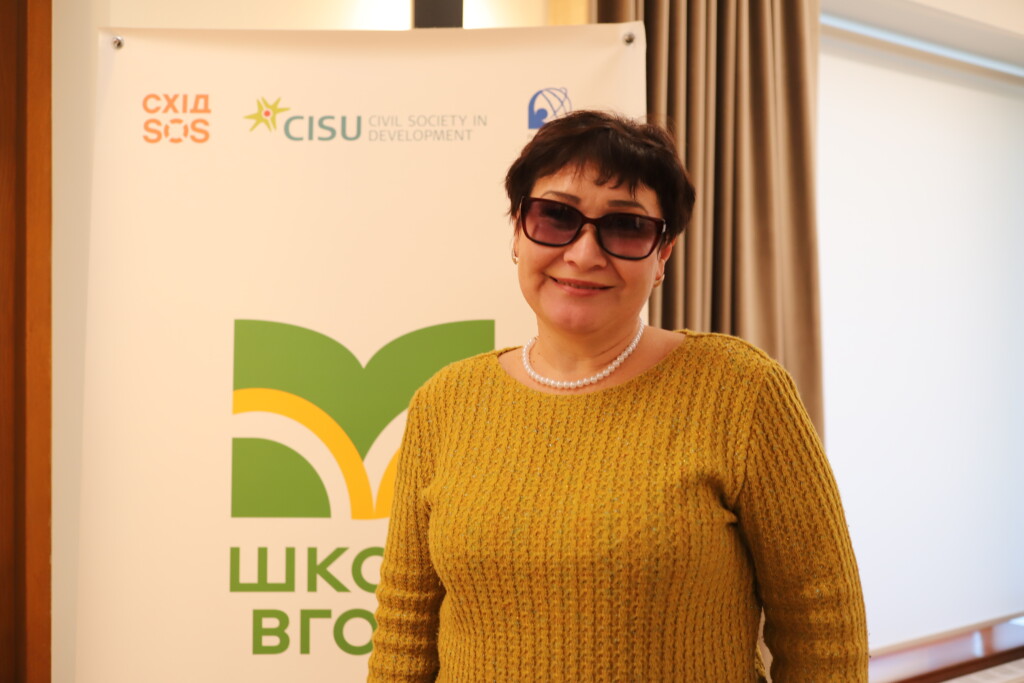
Svitlana Anatoliivna is a history teacher from Lysychansk in the Luhansk region. Having devoted 35 years to education, she says that both her brightest and her most painful memories are connected to school.
“The best part is remembering the projects we implemented before the full-scale invasion. I remember East SOS under its previous name – but just like today, it supported us in many initiatives, including the school hub. It was our best experience,” Svitlana recalls.
This period of growth and development ended abruptly in May 2022. Lysychansk came under constant shelling by russian artillery. Lyceum No. 28 “Garant”, where Svitlana worked, also became a target. As a result of the attacks, a fire broke out, destroying three floors of the building; part of the structure collapsed, and whatever survived was later looted by russian soldiers.
“One of our colleagues, who later joined the Ukrainian Armed Forces, managed to reach what was left of the school and remove the flag. The ‘Garant’ flag was the only thing we were able to save and take with us – a reminder of our home,” the teacher says.
The damaged relic – now a symbol of hope – is kept by the school principal in Dnipro, where the lyceum’s administration was relocated. Because of the war and temporary occupation, the entire teaching staff has been dispersed across Ukraine and abroad.
“We have launched a new tradition – organizing Garant-Camp. Once a year, we gather in a designated place to support our community and speak openly about what hurts, because we share a deep and meaningful past. The most important thing is that we see each other and continue to believe that ‘Garant’ is not just walls, but our shared values,” Svitlana emphasizes.
The school’s students are now “scattered” across Ukraine and studying in the Baltic states, England, France, Germany, and Poland. But the most sensitive and painful issue for Svitlana Anatoliivna is the children who remain in the temporarily occupied territories and try to connect to Ukrainian lessons using VPNs.
“Most of them are high school students who have known us personally since before the full-scale war. Of course, when I realize that a child has joined [a lesson] from the TOT, I immediately start worrying, and I try to ask carefully whether it is safe for them to be online. It is a risk,” the teacher says.
Despite the danger, these children are determined to maintain their connection with Ukraine. According to Svitlana Anatoliivna, many of them continue to obtain Ukrainian educational documents. Still, the teacher worries deeply about the youngest students.
“Every year, there are graduates who receive Ukrainian certificates while living in the temporarily occupied territories. This means that people there have not lost hope – they hope to return and study at Ukrainian universities one day. High school students are still holding on. My heart hurts for the younger children who are being forced to forget the Ukrainian world, and some of them no longer even remember it,” she says.
Her desire to keep up with the times motivated Svitlana to participate in digital competency training. With 35 years of teaching experience and new knowledge in digital tools, she can now interact with her students even more effectively.
“I want to understand my children better – those who sit on the other side of the screen – and to know where the world is heading. I really want artificial intelligence not to take away our humanity. For me, digital competency training is an opportunity to keep up with my students, because they are still ahead of our generation,” Svitlana says.

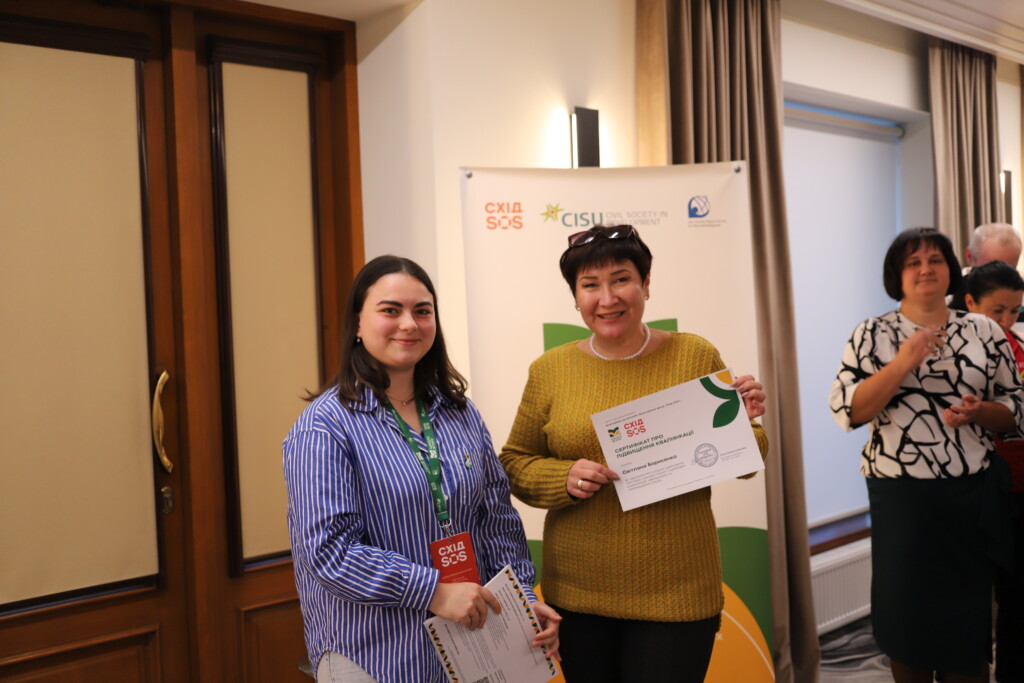
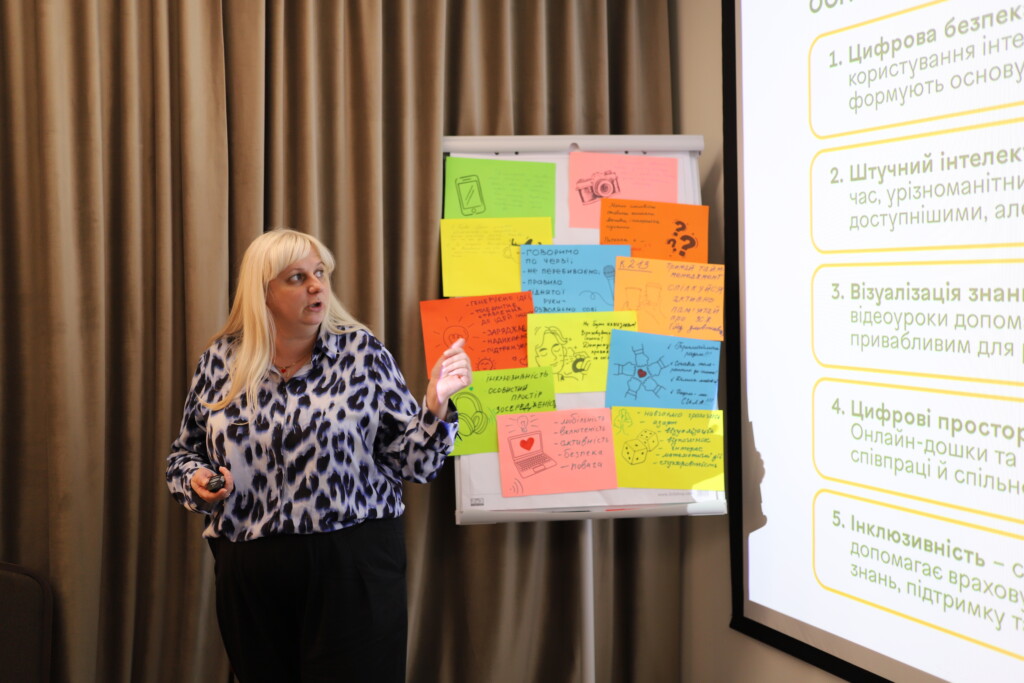
Svitlana Anatoliivna noted that her knowledge of digital tools has expanded significantly. Together with colleagues from relocated schools in the Luhansk, Donetsk, Zaporizhzhia, and Kherson regions, she not only mastered popular AI tools but also learned to create visuals from text, collaborate on virtual whiteboards, design joint student activities, track progress, and discuss outcomes.
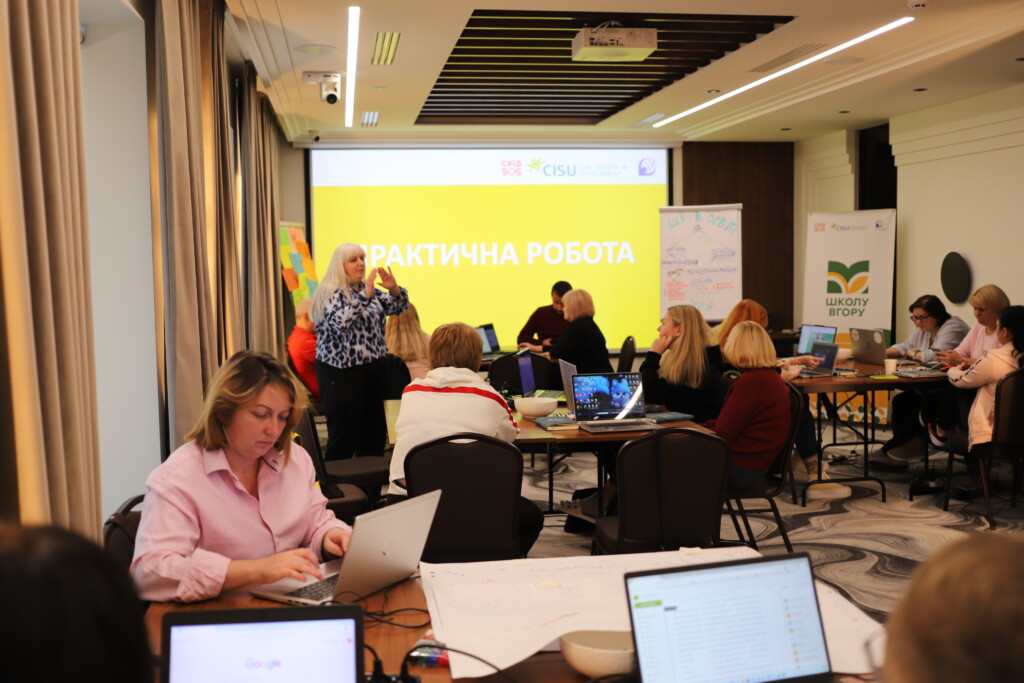
She also expressed admiration for the high level of training provided by Marharyta Soroka. The offline training in October 2025 in Lviv was led by Marharyta, Svitlana’s fellow citizen. In January 2022, Marharyta was part of a team of educators from Luhansk who developed their skills in digital security and inclusiveness during a training organized by East SOS. Now, she is sharing her knowledge with colleagues across the region.

Svitlana Anatoliivna holds a dream shared by millions. She faces reality without illusions but maintains her faith and inner strength. She speaks of it plainly, as part of her daily experience:
“I want my son to come back from the war. I understand that returning to normal life will be a challenging and gradual process. That is why we must transform, seek opportunities now, be present in the moment, and make the most of every chance that comes our way. As a Ukrainian, I want Ukraine to survive. The experiences we have gained through all these years of struggle should be a lesson for the world,” said Svitlana Borysenko.
Oleksandr Afendikov: The Story of a Teacher from Velyka Novosilka About Evacuation and the Resilience of Education
Oleksandr Afendikov is a deputy principal and computer science teacher from the village of Velyka Novosilka in the Volnovakha district, Donetsk region.
He began his teaching career in 2009 after completing a master’s degree at the Sloviansk State Pedagogical University, where he found a vacancy in his hometown. Since then, he lived and worked in his small homeland – until March 2022.
“We left at the end of March because the shelling in the Volnovakha district intensified – there was no electricity, and the bridges had been blown up. My parents told me not to wait, to leave, because nothing good would come. We left, like everyone else, for two weeks. We thought everything would pass,” Oleksandr recalls.
But what they thought would last two weeks turned into years. At first, the family stayed with his wife’s parents for a year. Later, they relocated to the Dnipropetrovsk region to ensure their children could attend school and participate in extracurricular activities in person. The experience of remote learning during the COVID-19 pandemic enabled the school to quickly deploy a corporate digital network and enhance the quality of online education.
“Using students’ personal accounts made it difficult to identify who was actually joining the lessons. Sometimes, people with incorrectly signed profiles received access. Teachers, lacking experience at the time, mistakenly allowed them into the classroom. Such interruptions – aimed at disrupting the lesson – included playing the russian national anthem or, less often, displaying content with obscene language,” the computer science teacher says.
These incidents prompted Oleksandr Ihorovych to develop a corporate Google network for the school. This system allowed him to protect lessons from unauthorized access, organize electronic document management, and create a shared drive for colleagues.
“At the same time, we finalized our website, and an entire section dedicated to remote learning appeared there.”
The war has scattered the gymnasium’s students across the world: out of more than 400 children, around 150 now study abroad. Only three students remain in their native Donetsk region.
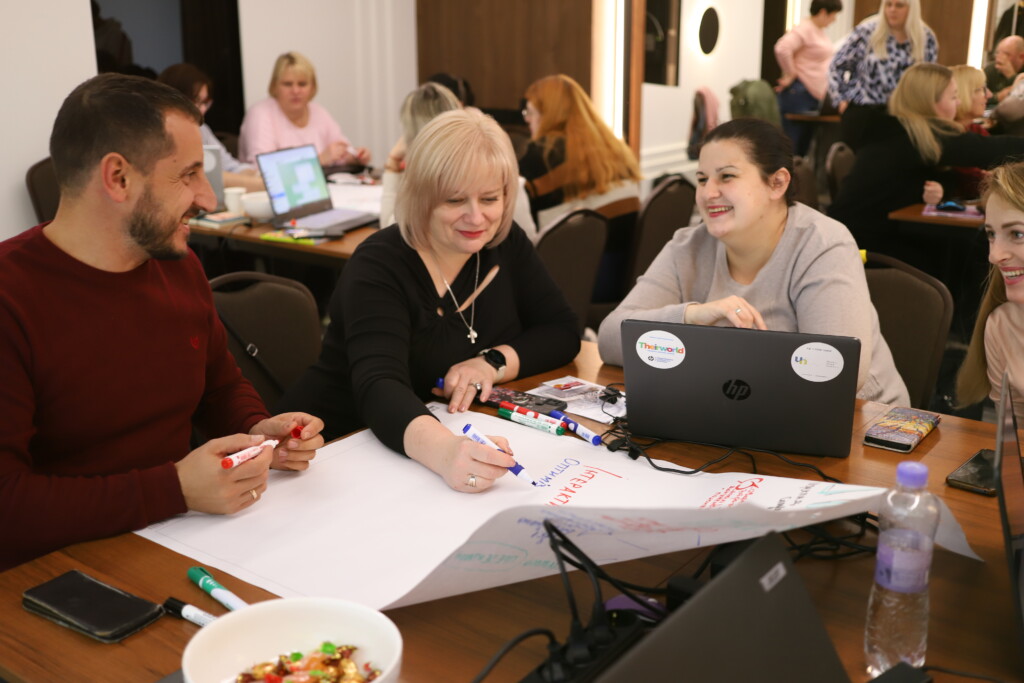
As a computer science teacher, Oleksandr Ihorovych views digital competency trainings not only as a source of new knowledge but also as an important space for communication and support.
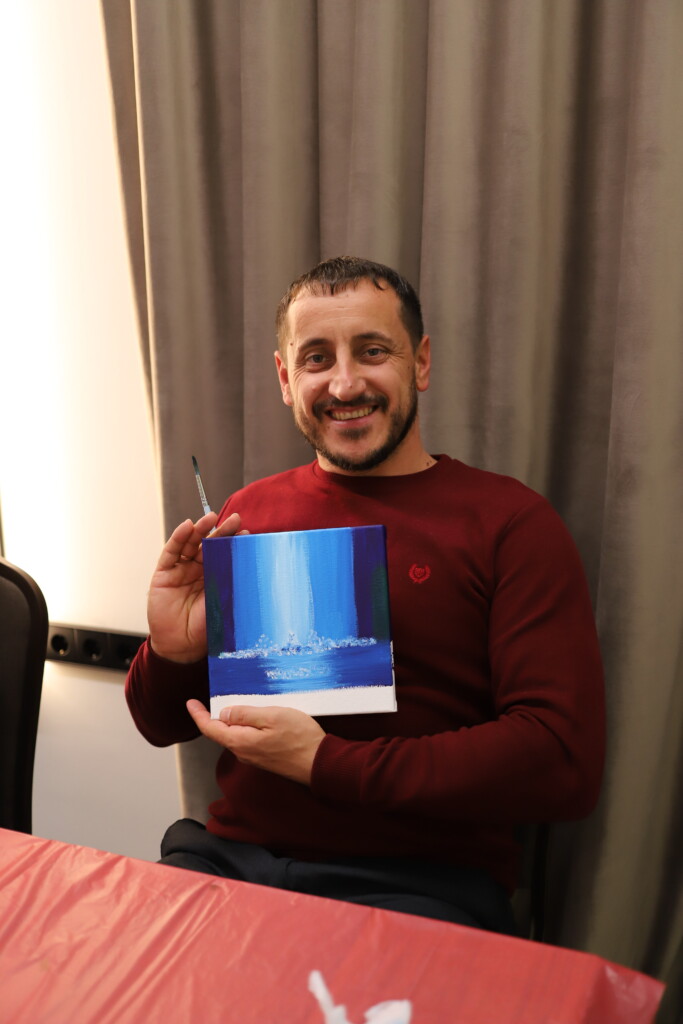
“Everything you showed – almost everything – was already familiar to me, because it’s my field. But I was really interested in talking to the organizers and my colleagues. And I especially enjoyed the art therapy. They created wonderful drawings. I didn’t even know I could draw,” he says.
Like millions of Ukrainians, Oleksandr lives with uncertainty every day. He lost most of his home and belongings, yet managed to save some things – including those he retrieved by returning to his village under fire. But in the struggle to preserve what remains of his life, his greatest wish is not material; it is psychological recovery.
“I think all of us want stability and at least some understanding of how to move forward. Uncertainty is psychologically exhausting,” he says.
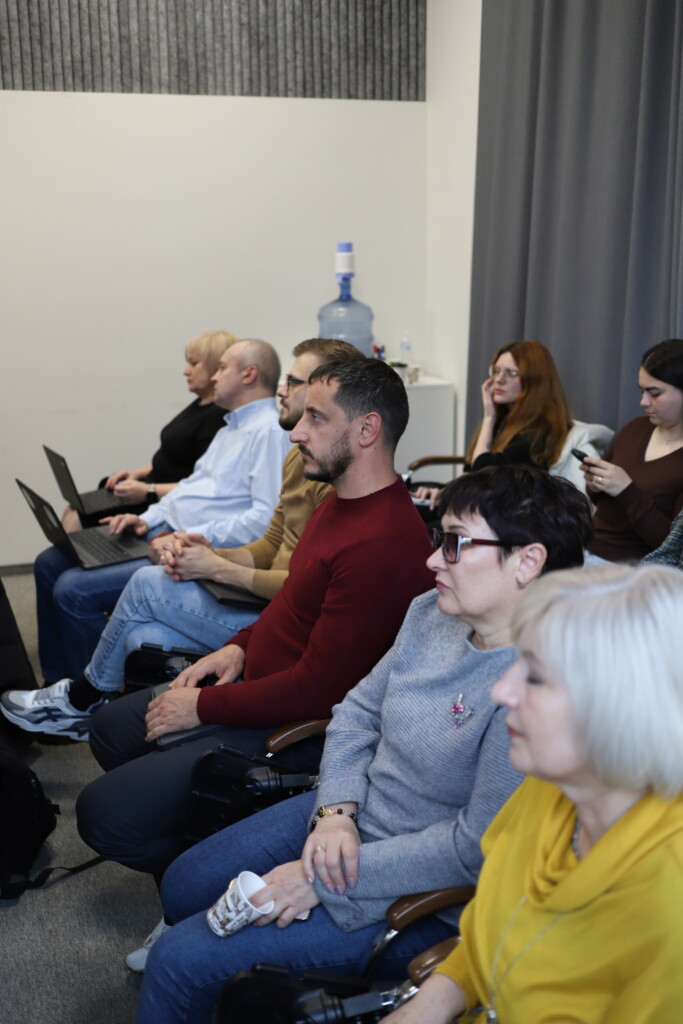
Training on digital competencies for educators was organized by East SOS as part of the project “School Up: Strengthening the Capacity of Frontline and Displaced Schools in Ukraine”, implemented in cooperation with the Danish Helsinki Committee and with the support of CISU.
Read more about the intensive five-day training program for 25 teachers from relocated schools in Lviv.