On the anniversary of the russian Bombing of the Mariupol Drama Theatre, East SOS Publishes Testimonies
On March 16, 2022, russian military aircraft dropped powerful bombs on the Mariupol Drama Theatre — a shelter where more than a thousand civilians had taken refuge from the shelling. Despite the massive sign ДЕТИ (CHILDREN), written in russian and clearly visible on the ground outside the building, the theatre was reduced to rubble. Various investigations suggest that between 300 and 600 people perished in the attack.
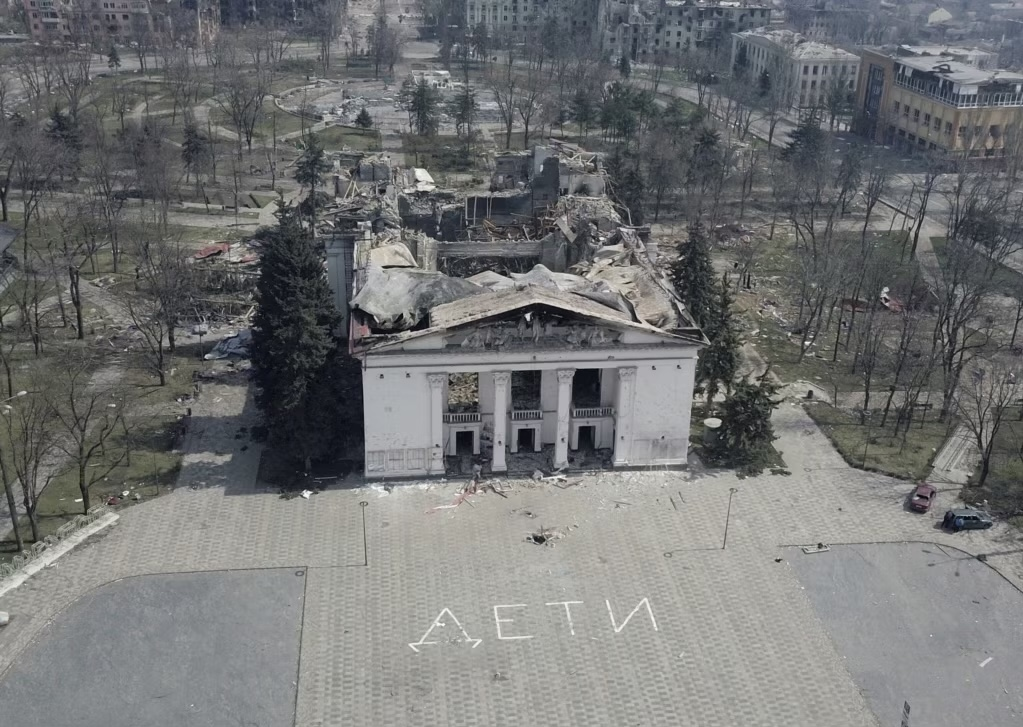
By then, Mariupol was already under a complete blockade, subjected to constant heavy shelling, and experiencing a humanitarian catastrophe. For weeks, thousands of people sheltered in basements without water, food, electricity, or any means of communication, were trapped in the city simply trying to stay alive.
Commemorating the anniversary of the airstrike, we are publishing testimonies from Mariupol residents documenting life in the besieged city.
Since the full-scale invasion began, East SOS has collected 1,235 firsthand testimonies, documenting 2,176 potential war crimes committed by the russian federation. Names have been changed for security reasons. All individuals featured in these accounts have since left the temporarily occupied territories.
During the occupation of Mariupol, russian forces systematically committed acts of violence against civilians. There is a documented case of soldiers opening fire when they saw a civilian woman. The woman suffered a spinal injury as a result of the fall, an incident recounted by a witness named Volodymyr:
“There was a gunshot. The woman had been hiding in the basement of a small private house. She was coming out of the basement when one of the Chechen soldiers fired right beside her, perhaps out of fear or something. She got frightened, fell, and suffered a spinal injury. That shot caused such a severe injury. We are now applying for disability status for her, because she is unable to move around on her own.”
Systematic and indiscriminate shelling of the city and its outskirts, including the village of Pokrovske (ed. note: Mariupol Raion, Donetsk Oblast), resulted in the deaths of many residents, including children. Andrii shared this account with our documenters:
“A child was killed in our village. The daughter of my child’s godmother, she was just eight years old. A young man named Komisarov was killed during a mortar shelling. He lived four houses away from me. A young woman from the village was killed during an airstrike. Her maiden name was Zlyvka; she was pregnant at the time of her death. After that, Maksym Livienkov was also killed. Then there was an elderly man, I don’t recall his last name, but he lived with his wife. He was killed instantly when their house took a direct hit.”
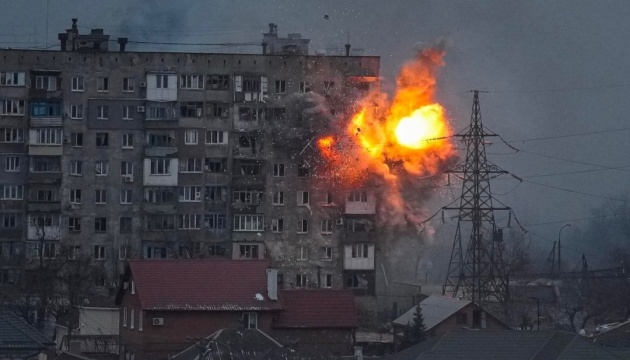
The constant shelling of the city’s civilian infrastructure, including residential buildings, forced people to live in basements. Olexandra, who was a teenager at the time of the fighting, shared her experience of one such attack:
“We jumped up and ran to the bathroom. As soon as we sat down, a shell hit our building on the fifth floor while we were on the third. The blast wave ripped through our house, knocking over furniture and pieces of the ceiling. My sister and I were slammed hard against the wall. It was so loud and terrifying, the ceiling collapsed so that we couldn’t see anything. I was screaming at the top of my lungs at that moment. My mother thought I was injured, but we couldn’t see anything because the house was falling apart. My mother was terrified and screamed a lot as well. My father immediately grabbed my sister. They tried to run to our bedroom with the cat, but the entrance was already blocked by a wardrobe. So, my father quickly grabbed Nelya and the cat to make sure she didn’t get separated. After that, my father and I helped my mother and just pulling her down the stairs. Outside, we tried to head toward the basement, but there was broken glass everywhere, it was freezing cold, and the ground was slippery with ice. We weren’t properly dressed, we were all just wearing slippers and socks. We didn’t have time to grab anything. We just ran to the basement in whatever we had on. The shelling didn’t stop, cars were burning around us, people were running, some were wounded, and there was panic everywhere. Pieces of the roof and walls were falling from the buildings. It was frightening and incredibly loud. We had to run around our house to reach the basement, as there was no one near the entrance.”
russian forces carried out airstrikes on hospitals, maternity wards, and large gatherings of people. Victoria recalls one of those attacks:
“One of those days was March 9. Because of the russian shelling, there was no electricity, water, or internet, absolutely nothing. The only place where there was any internet was near the Kyivstar tower. Everyone in the area knew about it, and everyone gathered there to catch the signal. That day, we witnessed the shelling of the maternity ward. It happened very close to us, and we saw the plane drop the bomb on the maternity ward. We could see it flying. We were terrified, thinking it would drop another bomb, because there were a lot of people near the tower, and we thought it might be the last connection we had in the city. The ground shook from the explosion. My husband and I fell to the ground from the blast wave. For a moment, I thought I was dead.”
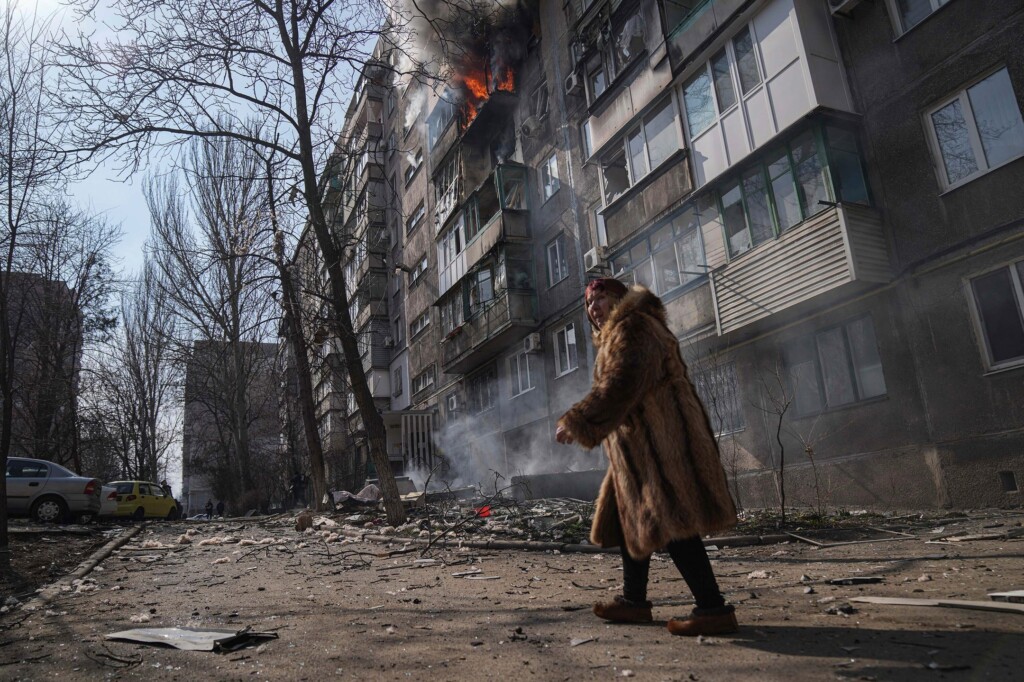
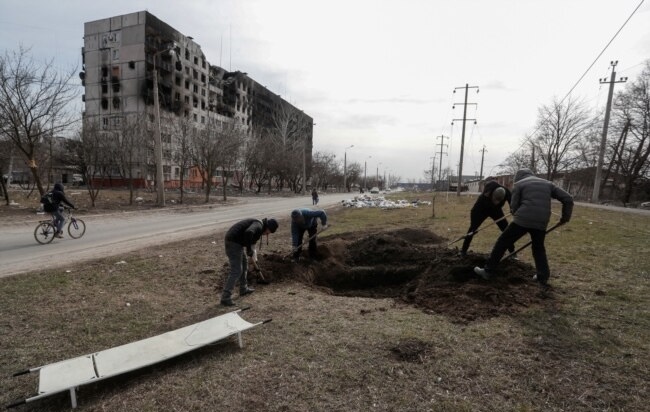
In temporarily occupied Mariupol, russian forces committed violence against the civilian population. People who were unable to escape the city faced unjustified checks, searches, the use of force, and shelling. Sophia, who witnessed the daily violence from the russian forces, recounted her experience to the East SOS documenters:
“No one should ever have to go through that, not even remotely. Both russian soldiers and the DNR proxy fighters came and committed these atrocities. They could shoot or strip a woman in the cold just like that. When the city was occupied, we were constantly subjected to checks. The city was divided into some kind of zones, and DNR proxy fighters and russian soldiers set up checkpoints. You had to go through them, there was no way around. If you tried to pass by, you’d be shot dead. They checked passports. Every check was extremely stressful because they would call this and that (bad) if your passport was Ukrainian. For me, as a Ukrainian woman, and I’m not any bad sort being born in Ukraine, that feeling was strange and very unpleasant. It was terrifying too, once I was brought to a checkpoint, there were several raids. The first one was when soldiers just ran through the city shooting anyone in sight, simply executing people. There were also raids where they constantly checked phones.”
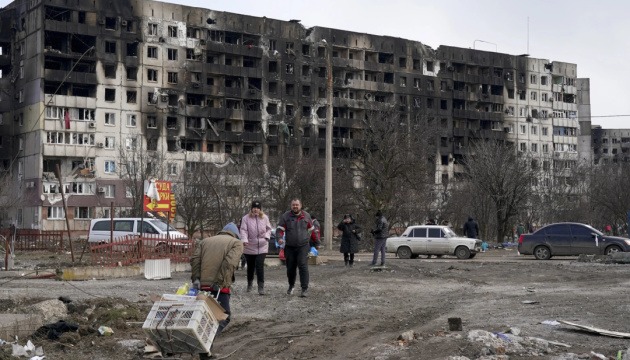
Meanwhile, during the occupation, leaving the city was incredibly difficult. The roads were blocked by russian and DNR forces, who demanded money for the right to pass through the checkpoints. Yana described one such experience:
“We were stopped by armed DNR proxy fighters. They stopped the cars, checked the trunks, and asked where we were going. But they didn’t let us pass unless we paid. Of course, they demanded dollars, they wanted money, I don’t even remember how much we gave them. After that, we made our way to Berdyansk. We got there without too much trouble, stayed overnight, and left the next day, on March 23.”
The documentation of war crimes by the East SOS team is conducted as part of the project “Support for War-Affected Vulnerable Groups and Residents of Remote Territories in Ukraine,” with financial support from the European Union.