Cars Shot at Point-Blank Range: East SOS Publishes Testimonies on the Occupation of Kyiv Oblast
After Kyiv Oblast was liberated from occupation, the world saw the full scale of the crimes committed by russian forces: civilians shot dead in the streets, bodies found in basements, and people tortured and murdered during the occupation.
According to the police, more than 1,370 bodies of civilians were found in Kyiv Oblast, including many people who had been shot or deprived of access to medical care. More than 9,000 war crimes have been documented. Cities, towns, and villages across Kyiv Oblast suffered widespread destruction of residential buildings, infrastructure, schools, and hospitals.
On the anniversary of the liberation of Kyiv Oblast, East SOS is publishing testimonies from people who survived the russian occupation. The names of the respondents have been changed for safety reasons.
Kateryna and Oleksandr Tytov fled the russian occupation of Donetsk in 2014, only to come face to face with the so-called “russkiy mir” (russian world) once again in Hostomel, Kyiv Oblast, in 2022.
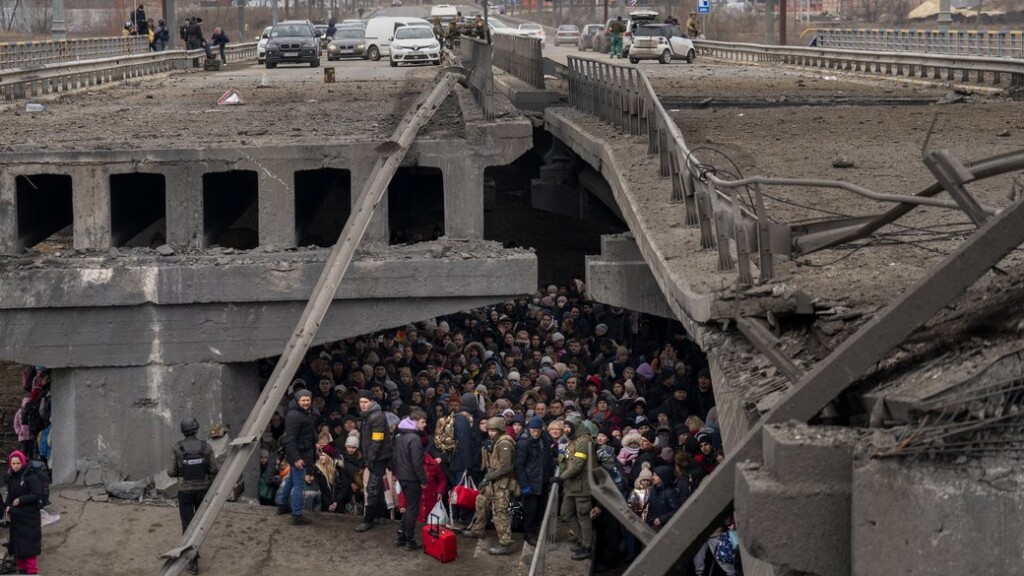
The couple, along with their two children, managed to make it to the destroyed bridge in Romanivka, where civilians were being evacuated:
“When we reached the bridge, we saw a horrifying scene. There were a lot of cars, lots of people of all ages, abandoned strollers, and suitcases left lying around. The river crossing consisted of 30-centimeter-wide planks, and people had to make their way across 100 meters of obstacles like some kind of mountain goats. After that, we had to run along a road under fire until we got far enough away for a bus to collect us.”
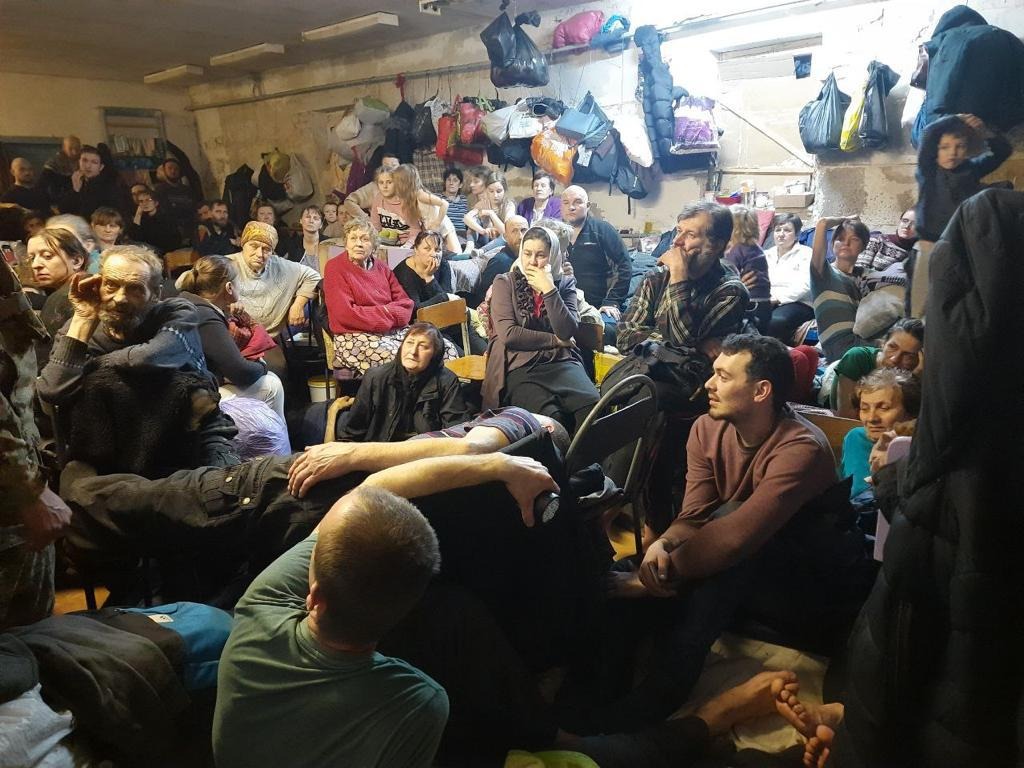
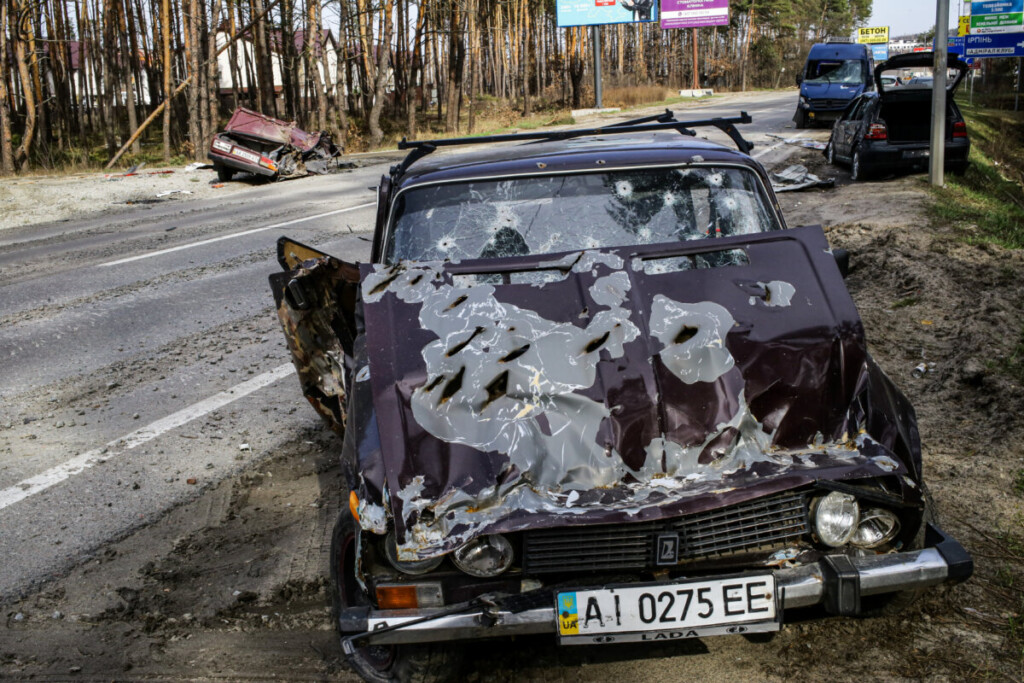
As the couple recalled, there were countless cars along the road between Hostomel and Bucha that had been fired on by russian forces, with people still inside them:
“We saw so many cars that had been shot up, with people inside them. They were civilians who had been trying to leave, and you could see the bullet wounds. The windshield was shattered, with a bullet hole and blood all around it. The cars had been shot at point-blank range. […] I went down and saw that there were two bodies in one of the cars — the driver and the passenger in the front seat, a young man and a young woman. They were probably no older than 25, maybe not even 20. The young man had been shot in the neck, and the young woman in the chest and abdomen.”
People who were forced to remain under occupation, or who did not manage to leave during the fighting, took refuge in shelters. As Kateryna from Bucha recalls, the children had the hardest time: having spent so much time in shelter without proper conditions and falling gravely ill as a result:
“Some 80 people were in the school shelter, including about 30 children. They were all little children, there was even a one-year-old girl there. It was extremely difficult because it was so damp, and the children fell ill straight away.It set off a chain reaction: before long, everyone was down with a high fever. There was no medicine.”
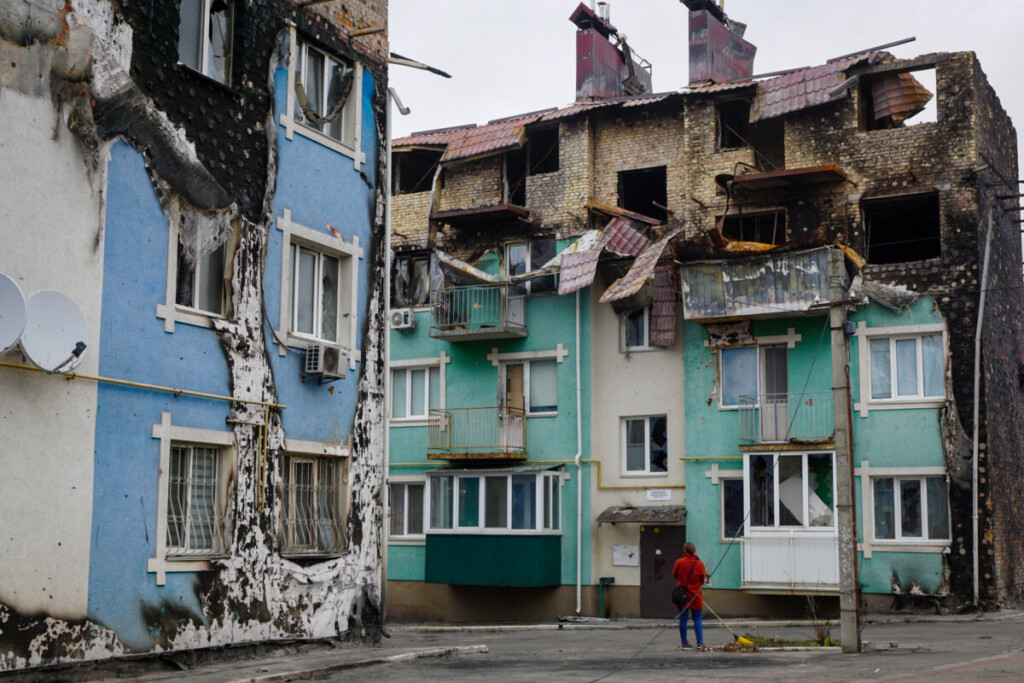
At the same time, people tried to comfort the children and support one another. Oksana Barkalova shared this with the our documenters. Back in 2014, she was forced to leave her hometown of Donetsk and start a new life in Irpin.
“We found some toys for cats in our backpack, and a few children’s toys too. My daughter entertained the little ones, played with them, and calmed them down. We also had a wonderful neighbor who came down into the shelter and played the guitar for us. It helped distract us, because when the shelling started, panic broke out – real panic among the children and their mothers. So he came down, started playing the guitar, and tried to keep our spirits up. And we began singing, taking deep breaths, splashing water on one another.”
People did their best to create decent living conditions in the shelters. This is how Kateryna from the village of Kolonshchyna in Makariv Raion recalls those events:
“Our neighbor had already been through all of this in Donetsk. He immediately said that we had to find a house with a shelter. He and the other men from our neighborhood teamed up and started setting up this bomb shelter. They brought in chairs, tables, everything we might need so we could go there during attacks. This shelter was like a real room, with windows. They covered all the windows with sandbags to make it safe. They built a stove with their own hands to keep it warm, because it was winter and freezing outside. The neighbors had a two-year-old granddaughter, we had a small child too, and so we kept going back and forth between the bomb shelter and the house.”
Despite russian shelling of civilian infrastructure, volunteers tried to evacuate people from the towns and villages around Kyiv. Anton Senenko (name unchanged), who evacuated residents of Irpin in his own car, spoke to the Foundation’s documenters about his experience as a volunteer:
“We were driving in convoy like blind kittens, not really knowing where we were or what was going on. Then we reached a humanitarian collection point, where we usually unloaded food supplies, and that was the first time I witnessed a mortar attack. Shells were exploding right in the neighboring yard, debris flying everywhere. Then our convoy took out a family with a small child. The mother ran out carrying the little one with absolutely nothing at all. They bolted into the car, got in – and that was it, we drove them out.”
Despite the danger, volunteers continued helping people, including those with limited mobility who could not quickly reach evacuation points on their own.
“We were just about to leave, when the mother of the boy I was evacuating said, “Unfortunately, the grandmother who’s meant to go with you is walking very slowly…’ The mother and child had reached the church more quickly, but the grandmother was still walking along the road. I said I’d go find her, drove a little farther, and sure enough, there she was. I turned around, and we picked her up. We took her to the meeting point, where we also picked up another boy. And that was it, everyone was seated, their things were packed, and we were ready to head back to Kyiv.”
Since the beginning of the full-scale invasion, the East SOS team has conducted more than 1,235 interviews and documented more than 2,176 alleged war crimes.
The documentation of war crimes by the East SOS team is carried out as part of the project “Support for War-Affected Vulnerable Groups and Residents of Remote Territories in Ukraine,” with financial support from the European Union.