ЗАГ: Engaging with the Temporarily Occupied Territories: (In)consistency, Security, and Human Rights — Yaroslav Taranets on Hromadske Radio
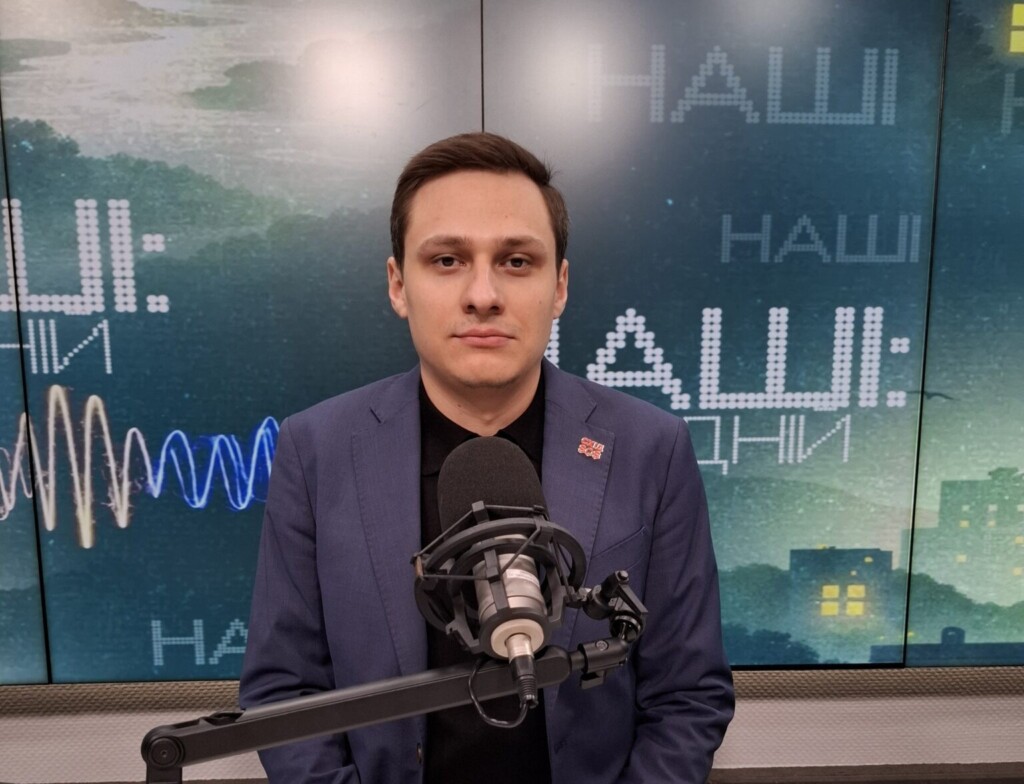
“The government must find a balance between recognizing the fact that our people, Ukrainians, remain in temporarily occupied territories and ensuring that security is never compromised. This balance requires clear regulation, with no room for ambiguity,” said Yaroslav Taranets, Advocacy Officer at East SOS, during an appearance on Hromadske Radio. During the interview, he explained why Ukraine must maintain consistent, ongoing engagement with the temporarily occupied territories, which government institutions are responsible for this area, and whether Ukrainian legislation protects the rights of people living under occupation.
Here are the key points from the conversation:
- On the legislation on responsibility for collaborationism
According to Yaroslav Taranets, the legal framework governing the rights and circumstances of people who leave the temporarily occupied territories needs further refinement, as it currently allows for conflicting interpretations and creates a number of risks.
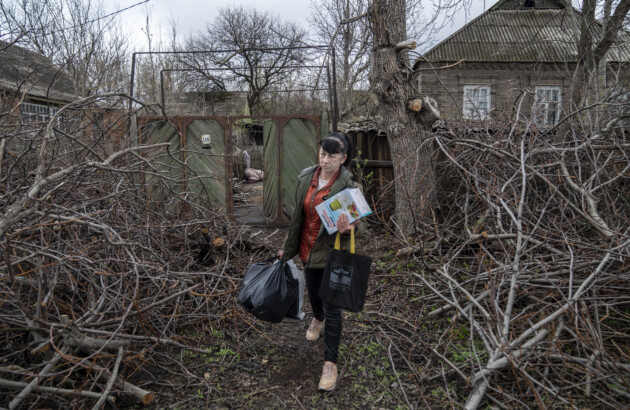
As the occupying authorities attempt to force the local population into their administrative and social systems, residents of the occupied territories are forced to choose between playing by the rules imposed under occupation for the sake of survival and remaining outside the system and at the cost of losing access to every essential service, from medical care to pensions.
Yaroslav Taranets stressed that Ukrainian law must clearly define which actions pose a real threat to Ukraine’s national security and which should be understood as acts of survival. Without that clarity, people in the temporarily occupied territories do not know what will happen to them if they leave for government-controlled territory. russian propaganda only deepens those fears.
- On the government authorities responsible for the temporarily occupied territories
Yaroslav Taranets is convinced that Ukraine must maintain a consistent and continuous policy toward the temporarily occupied territories, as russia is doing everything it can there to cut off local residents from Ukrainians living in government-controlled areas.
For some time, issues related to the temporarily occupied territories were handled by the Ministry for Reintegration of the Temporarily Occupied Territories of Ukraine. It was later restructured and renamed the Ministry of National Unity, and in the summer of 2025, the Ministry was formally dissolved. Some responsibilities related to the temporarily occupied territories were transferred to the Ministry for Communities and Territories Development. At the same time, Yaroslav Taranets noted that this issue extends across multiple sectors and, in practice, involves nearly every ministry in Ukraine. For example, documents issued under occupation fall under the Ministry of Justice, while compensation for destroyed or lost housing is handled by the Ministry for Communities and Territories Development.
- On the challenges of issuing Ukrainian documents to people leaving the temporarily occupied territories
Obtaining Ukrainian identity documents remains a major challenge for people who leave the temporarily occupied territories. For instance, many children born under occupation have never been issued Ukrainian documents.
For the state, one of the key difficulties is registration and keeping records of citizens who move to government-controlled territory or remain under temporary occupation. As Taranets explained:
“When a person applies for documents, the first step is to establish their identity, and the state then has to verify that information: whether such a person was indeed born, whether the relevant data exists in the registry, and whether they are recorded as a citizen of Ukraine. But when Ukraine, as a state, tries to verify that information, it often simply cannot find it, because no records are being kept of citizens born in the temporarily occupied territories.”
According to the East SOS advocacy officer, both policy and legislation concerning the temporarily occupied territories and their residents must be based on human rights principles and international humanitarian law.
During the broadcast, Yaroslav Taranets also recalled that the Coalition of Organizations Working to Protect the Rights of People Affected by russia’s Armed Aggression against Ukraine — of which the East SOS Charity Foundation is a member — recently prepared a document titled “17 Priority Steps for the State in 2026 to Protect Human Rights in Wartime.”
Among those steps is the development of a strategy to ensure protection for people from the temporarily occupied territories and support their reintegration into Ukrainian society. At present, the rights of these citizens are being put at risk by, among other things, the Law on Multiple Citizenship, which entered into force on January 16, 2026. It contains contradictory provisions in the article dealing with Ukrainian citizens acquiring the citizenship of a state officially recognized as an aggressor state. This may lead to arbitrary interpretation of the law and create grounds for people to be stripped of their citizenship.
Additional restrictions may also arise from the proposal to require mandatory polygraph testing for people from the temporarily occupied territories. Under this initiative, applicants for civil service or local government positions would be screened for russian citizenship. The draft law has not been passed, in part thanks to the position taken by the coalition of human rights organizations on this issue.
The Advocacy Officer believes it is essential to maintain ties with people living in the temporarily occupied territories, give them a sense of support and continued connection, and create real conditions for leaving occupied territory and adapting to life in government-controlled Ukraine.
Read the article and listen to the full conversation on the Hromadske Radio website.
Recently, Yaroslav Taranets, Advocacy Officer at East SOS, appeared on Suspilne TV to outline the risks associated with the new mandatory evacuation law.